Unpositioned
Something is wrong
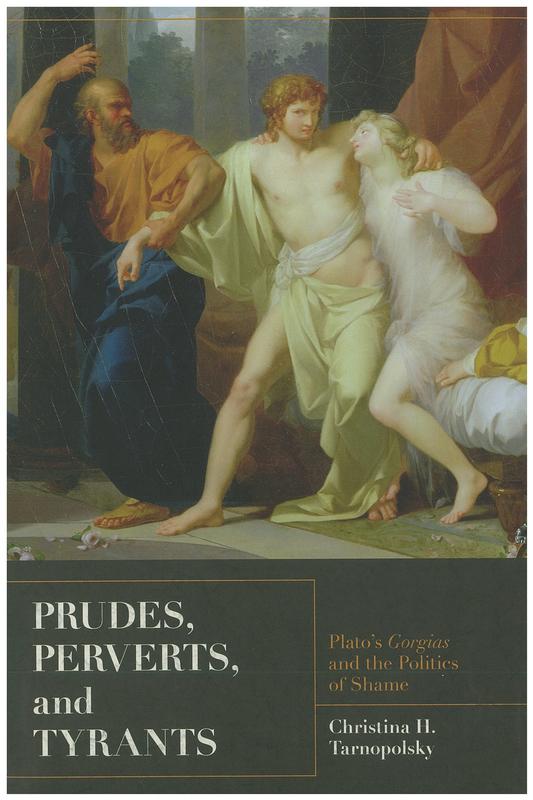
Prudes, perverts, and tyrants : Plato's Gorgias and the politics of shame / Christina H. Tarnopolsky
This study of Plato's Gorgias examines the role of shame in democratic politics, distinguishing between harmful shaming and a respectful form essential for deliberation. It argues that integrating emotion and reason is necessary for self-reflexive political practice.
CONNECTIONS
No connections
LOCATION HISTORY
No location history available for this book.
FULL RECORD
Accession Number: 8569
Site: Vernon O Content
Collection: N/A
Location: N/A
Binding Type: Hard Back
Book Images
Hover to see live images
No live
No live
Vernon Fields
View in Vernon Browser| vernon_accession | 8569 |
| vernon_id | 12365 |
| vernon_slug | prudes-perverts-and-tyrants-platos-gorgias-and-the-politics-of-shame-christina-h-tarnopolsky |
| vernon_authors | Christina Tarnopolsky |
| vernon_tags | Psychology, History, Political science, Social sciences, Civilisation, Pleasure, Emotions, Manners and customs, Greece -- History, Democracy, Political science -- Philosophy, Philosophy, Ancient, Philosophy -- History, Dialogues, Recitations, Speeches, addresses, etc., Greece -- Social life and customs, Shame, Platonists, Sophists (Greek philosophy) |
| vernon_production_date | 2010 |
| vernon_brief_description | Through a careful study of Plato's Gorgias, Tarnopolsky shows that contemporary conceptions of shame are far too narrow. For Plato, three kinds of shame and shaming practices were possible in democracies, and only one of these is similar to the form condemned by contemporary thinkers. -- Publisher's description. |
| vernon_object_type | Books/Document genres/Information forms/Visual and Verbal Communication |
| vernon_locations | Transit |
| vernon_ob_status | Accessioned |
| vernon_isbn_issn | 9780691128566 |
| vernon_subject_people | Plato (Greek, b.428 BCE, d.247 BCE) |
| vernon_subject_objects | — |
| vernon_subject_classes | — |
| vernon_last_sync_timestamp | 2026-05-08 11:40 |
| vernon_cover_image_id | 21248 |