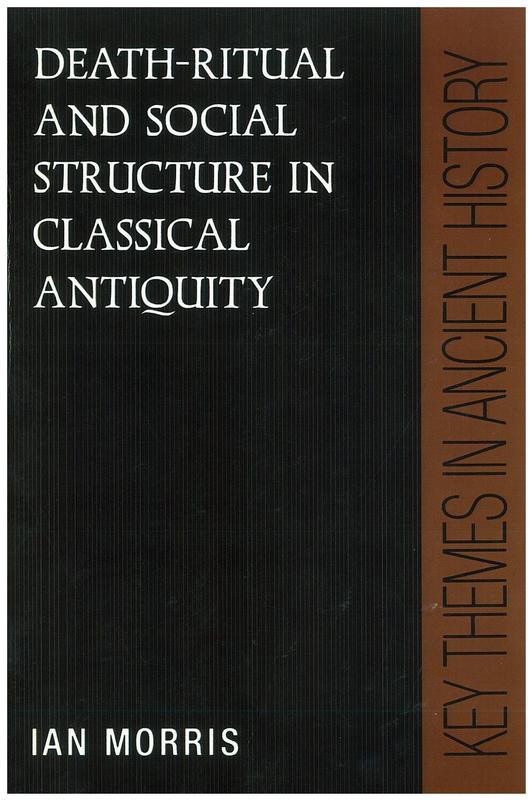
Death-ritual and social structure in classical antiquity / Ian Morris
This study examines how excavated burial remains serve as primary evidence for social history in the Graeco-Roman world. It analyses burial practices to understand community structures and social change from archaic Rhodes through to the late western Roman empire.
CONNECTIONS
No connections
LOCATION HISTORY
Ground, S2 bay 13, shelf 5
Current
(vertical)
May 18, 2026 16:30
Ground, S2 bay 14, shelf 6
(vertical)
May 18, 2026 16:29
FULL RECORD
Accession Number: 1988
Site: Vernon O Content
Collection: N/A
Location: N/A
Binding Type: Hard Back
Book Images
Hover to see live images
No live
Vernon Fields
View in Vernon Browser| vernon_accession | 1988 |
| vernon_id | 5880 |
| vernon_slug | death-ritual-and-social-structure-in-classical-antiquity-ian-morris |
| vernon_authors | Ian Morris |
| vernon_tags | History, Archaeology, Social sciences, Civilisation, Sociology, Social history, Anthropology, Power (Social sciences), Economics, Wealth, Manners and customs, Death, Life, Greece -- History, Burial, Funeral rites and ceremonies, Rome -- History, Social classes, Social status, Archaeology -- Methodology, Tombs, Death -- Social aspects, Cemeteries, Social structure, Social archaeology, Cremation |
| vernon_production_date | 1992 |
| vernon_brief_description | Explores the ways in which the excavated remains of burials can and should be a major source of evidence for social historians of the ancient Graeco-Roman world. -- Publisher's description. |
| vernon_object_type | Books/Document genres/Information forms/Visual and Verbal Communication |
| vernon_locations | On Shelf |
| vernon_ob_status | Accessioned |
| vernon_isbn_issn | 0521376114 |
| vernon_subject_people | — |
| vernon_subject_objects | — |
| vernon_subject_classes | — |
| vernon_last_sync_timestamp | 2026-05-18 09:50 |
| vernon_cover_image_id | 27129 |