M:S3:26 3
Edit position
Edit position

Last set 3 hours, 15 minutes ago. Manual moves override automatic placement until the next shelfie/spine match.

The myth of morality
Diagnose this book
Open in Vernon Browser

The myth of morality

by Richard Joyce

This philosophical study argues that moral discourse is flawed because the concept of moral authority is indefensible. It suggests natural selection has predisposed humans to project values and demands onto a world that does not inherently possess them.

Accession 16707 ISBN 9780521808064 Publisher Cambridge University Press
Book Images
Reference and live side by side Hover to see live images

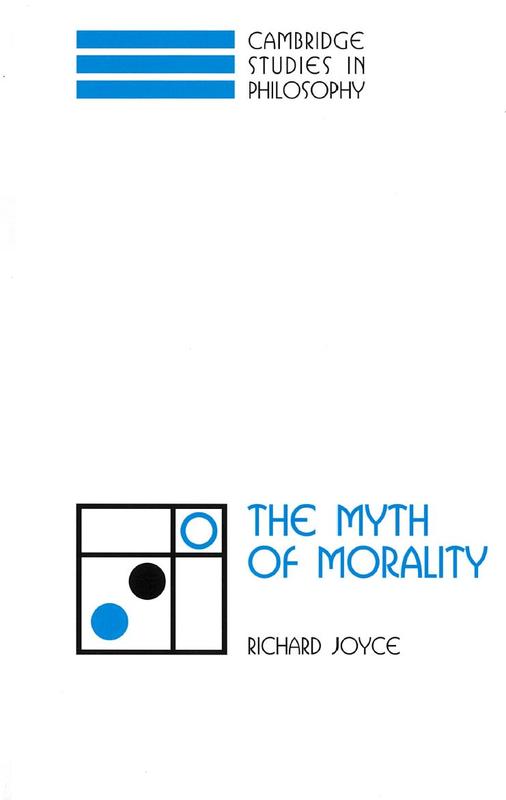
Reference
The myth of morality spine
The myth of morality cover
Live
The myth of morality live spine
No live
The myth of morality spine The myth of morality live spine
The myth of morality cover
No live
TAGS
Curated Derived
Philosophy Psychology
CONNECTIONS
No connections
State
on_shelf
True
position_updated_at
2026-06-10 16:15
orientation
vertical
Details

Physical

binding_type
Hard Back
dimensions
none captured
spine_text
none captured

Metadata

Book form
LOCATION HISTORY
M:S3:26 3 Current vertical
3 hours, 15 minutes ago
1 week, 5 days ago
3 weeks, 5 days ago
Book Location
Updated 3 hours, 15 minutes ago
Vernon snapshot
View live

Frozen copy of Vernon's record from the last sync. Fields tagged flow back into the Pulse record.

Last synced 2026-05-21 01:15 (2 weeks, 6 days ago)

Identity

name→ title
The myth of morality
vernon_id
26020
accession_no→ accession_number
16707
vernon_slug
the-myth-of-morality-richard-joyce

Drives Pulse state

curr_loc_status→ on_shelf
On Shelf
location_name
Zone S3/Level 2 (Mezzanine)/Phrontisterion/MONA
location_reason
On Shelf
isbn_issn→ isbn (when valid)
9780521808064

Descriptive

production_date
2001
object_type
Books/Document genres/Information forms/Visual and Verbal Communication
object_status
Accessioned
brief_description
Argues that moral discourse is hopelessly flawed. At the heart of ordinary moral judgments is a notion of moral inescapability, or practical authority, which, upon investigation, cannot be reasonably defended. Natural selection is to blame, in that it has provided us with a tendency to invest the world with values that it does not contain, and demands that it does not make. -- blurb

Subjects & people

authors→ author (initial fill only)
Richard Joyce
tags→ tags
Ethics, Philosophy, Humanity, Metaethics
subject_people
subject_objects

Cover image

vernon_cover_image_id→ cover_image
40570

Raw Vernon JSON

click to inspect

The source payload behind the snapshot above.

Use ⌘F to search once expanded.
{7 keys}
"slug": "the-myth-of-morality-richard-joyce"
"opacObjectId": "26020"
"opacCollection": {1 keys}
"opacCollectionId": "1"
"imagesCollection": {2 keys}
"images": [1 items]
"[0]": {5 keys}
"imageId": "40570"
"cssColors": [3 items]
"[0]": {9 keys}
"hex": "4682b4"
"hue": 207
"rank": 1
"presence": 5.26
"colorName": "steelblue"
"lightness": 49
"colorGroup": "blue"
"saturation": 44
"formattedColorName": "steel blue"
"[1]": {9 keys}
"hex": "778899"
"hue": 210
"rank": 2
"presence": 93.37
"colorName": "lightslategray"
"lightness": 53
"colorGroup": "gray"
"saturation": 14
"formattedColorName": "light slate gray"
"[2]": {9 keys}
"hex": "add8e6"
"hue": 195
"rank": 3
"presence": 1.35
"colorName": "lightblue"
"lightness": 79
"colorGroup": "blue"
"saturation": 53
"formattedColorName": "light blue"
"rawColors": [7 items]
"[0]": {6 keys}
"hex": "256891"
"hue": 202
"rank": 1
"presence": 5.26
"lightness": 35
"saturation": 59
"[1]": {6 keys}
"hex": "fafbfb"
"hue": 180
"rank": 2
"presence": 93.37
"lightness": 98
"saturation": 11
"[2]": {6 keys}
"hex": "99b8c7"
"hue": 199
"rank": 3
"presence": 1.35
"lightness": 69
"saturation": 29
"[3]": {6 keys}
"hex": "7c7479"
"hue": 322
"rank": 4
"presence": 0.02
"lightness": 47
"saturation": 3
"[4]": {6 keys}
"hex": "7c7c70"
"hue": 60
"rank": 5
"presence": 0.0
"lightness": 46
"saturation": 5
"[5]": {6 keys}
"hex": "bcb4a0"
"hue": 42
"rank": 6
"presence": 0.0
"lightness": 68
"saturation": 17
"[6]": {6 keys}
"hex": "c4bcb4"
"hue": 30
"rank": 7
"presence": 0.0
"lightness": 73
"saturation": 11
"imageLabels": [4 items]
"[0]": {5 keys}
"count": 4012
"score": 75.17
"status": "auto_verified"
"imageLabel": "Paper product"
"imageLabelId": 72
"[1]": {5 keys}
"count": 19018
"score": 64.23
"status": "auto_verified"
"imageLabel": "Publication"
"imageLabelId": 23
"[2]": {5 keys}
"count": 5750
"score": 60.53
"status": "auto_verified"
"imageLabel": "Graphic design"
"imageLabelId": 17
"[3]": {5 keys}
"count": 4954
"score": 56.06
"status": "auto_verified"
"imageLabel": "Science"
"imageLabelId": 180
"imageDerivatives": [6 items]
"[0]": {4 keys}
"url": "https://browser.mona.net.au/records/images/large/35751/7f17801e762df655a9918fb70c63d75801abc39b.jpg"
"width": "506"
"height": "800"
"identifier": "LARGE"
"[1]": {4 keys}
"url": "https://browser.mona.net.au/records/images/medium/35751/7f17801e762df655a9918fb70c63d75801abc39b.jpg"
"width": "253"
"height": "400"
"identifier": "MEDIUM"
"[2]": {4 keys}
"url": "https://browser.mona.net.au/records/images/nano/35751/7f17801e762df655a9918fb70c63d75801abc39b.jpg"
"width": "22"
"height": "35"
"identifier": "NANO"
"[3]": {4 keys}
"url": "https://browser.mona.net.au/records/images/small/35751/7f17801e762df655a9918fb70c63d75801abc39b.jpg"
"width": "95"
"height": "150"
"identifier": "SMALL"
"[4]": {4 keys}
"url": "https://browser.mona.net.au/records/images/tiny/35751/7f17801e762df655a9918fb70c63d75801abc39b.jpg"
"width": "47"
"height": "75"
"identifier": "TINY"
"[5]": {4 keys}
"url": "https://browser.mona.net.au/records/images/xlarge/35751/7f17801e762df655a9918fb70c63d75801abc39b.jpg"
"width": "741"
"height": "1171"
"identifier": "XLARGE"
"totalImages": 1
"objectSearchScore": 0.3118719
"opacObjectFieldSets": [40 items]
"[0]": {2 keys}
"identifier": "accession_no"
"opacObjectFields": [1 items]
"[0]": {1 keys}
"value": "16707"
"[1]": {2 keys}
"identifier": "name"
"opacObjectFields": [1 items]
"[0]": {2 keys}
"value": "The myth of morality / Richard Joyce"
"opacObjectFieldAttributes": [1 items]
"[0]": {2 keys}
"key": "title"
"value": "The myth of morality / Richard Joyce"
"[2]": {2 keys}
"identifier": "other_name"
"opacObjectFields": [1 items]
"[0]": {1 keys}
"value": ""
"[3]": {2 keys}
"identifier": "artist_last_first"
"opacObjectFields": [1 items]
"[0]": {1 keys}
"value": "Joyce, Richard"
"[4]": {2 keys}
"identifier": "prod_pri_date"
"opacObjectFields": [1 items]
"[0]": {2 keys}
"value": "2001"
"opacObjectFieldAttributes": [2 items]
"[0]": {2 keys}
"key": "earliest_date"
"value": "2001-01-01Z"
"[1]": {2 keys}
"key": "latest_date"
"value": "2001-12-31Z"
"[5]": {2 keys}
"identifier": "prod_pri_date_notes"
"opacObjectFields": [1 items]
"[0]": {1 keys}
"value": ""
"[6]": {2 keys}
"identifier": "edition"
"opacObjectFields": [1 items]
"[0]": {1 keys}
"value": ""
"[7]": {2 keys}
"identifier": "brief_desc"
"opacObjectFields": [1 items]
"[0]": {1 keys}
"value": "Argues that moral discourse is hopelessly flawed. At the heart of ordinary moral judgments is a notion of moral inescapability, or practical authority, which, upon investigation, cannot be reasonably defended. Natural selection is to blame, in that it has provided us with a tendency to invest the world with values that it does not contain, and demands that it does not make. -- blurb"
"[8]": {2 keys}
"identifier": "measure_desc"
"opacObjectFields": [1 items]
"[0]": {1 keys}
"value": ""
"[9]": {2 keys}
"identifier": "credit_line"
"opacObjectFields": [1 items]
"[0]": {1 keys}
"value": ""
"[10]": {2 keys}
"identifier": "curr_loc_status"
"opacObjectFields": [1 items]
"[0]": {2 keys}
"value": "On Shelf"
"opacObjectFieldAttributes": [1 items]
"[0]": {2 keys}
"key": "search"
"value": "curr_loc_status:"On Shelf""
"[11]": {2 keys}
"identifier": "ob_status"
"opacObjectFields": [1 items]
"[0]": {1 keys}
"value": "Accessioned"
"[12]": {2 keys}
"identifier": "lender"
"opacObjectFields": [1 items]
"[0]": {1 keys}
"value": ""
"[13]": {2 keys}
"identifier": "copyright_owner"
"opacObjectFields": [1 items]
"[0]": {1 keys}
"value": ""
"[14]": {2 keys}
"identifier": "copyright_type"
"opacObjectFields": [1 items]
"[0]": {1 keys}
"value": ""
"[15]": {2 keys}
"identifier": "copyright_start"
"opacObjectFields": [0 items]
"[16]": {2 keys}
"identifier": "copyright_expiry"
"opacObjectFields": [0 items]
"[17]": {2 keys}
"identifier": "copyright_notes"
"opacObjectFields": [1 items]
"[0]": {1 keys}
"value": ""
"[18]": {2 keys}
"identifier": "curr_loc"
"opacObjectFields": [1 items]
"[0]": {1 keys}
"value": "Zone S3/Level 2 (Mezzanine)/Phrontisterion/MONA"
"[19]": {2 keys}
"identifier": "object_type"
"opacObjectFields": [1 items]
"[0]": {2 keys}
"value": "Books/Document genres/Information forms/Visual and Verbal Communication"
"opacObjectFieldAttributes": [1 items]
"[0]": {2 keys}
"key": "search"
"value": "object_type:"Books/Document genres/Information forms/Visual and Verbal Communication""
"[20]": {2 keys}
"identifier": "collection"
"opacObjectFields": [1 items]
"[0]": {2 keys}
"value": "Main Collection/Library"
"opacObjectFieldAttributes": [1 items]
"[0]": {2 keys}
"key": "search"
"value": "collection:"Main Collection/Library""
"[21]": {2 keys}
"identifier": "prod_pri_place"
"opacObjectFields": [1 items]
"[0]": {1 keys}
"value": "Cambridge/Cambridgeshire/England"
"[22]": {2 keys}
"identifier": "prod_pri_publisher"
"opacObjectFields": [1 items]
"[0]": {1 keys}
"value": "Cambridge University Press"
"[23]": {2 keys}
"identifier": "physical_notes"
"opacObjectFields": [2 items]
"[0]": {1 keys}
"value": "xiii, 247 pages; 23 cm."
"[1]": {1 keys}
"value": "Including bibliographical references and index."
"[24]": {2 keys}
"identifier": "language"
"opacObjectFields": [1 items]
"[0]": {1 keys}
"value": "English"
"[25]": {2 keys}
"identifier": "isbn_issn"
"opacObjectFields": [1 items]
"[0]": {1 keys}
"value": "9780521808064"
"[26]": {2 keys}
"identifier": "user_sym_1"
"opacObjectFields": [1 items]
"[0]": {1 keys}
"value": "170 JOY"
"[27]": {2 keys}
"identifier": "usual_loc_being"
"opacObjectFields": [1 items]
"[0]": {1 keys}
"value": "Zone S3/Level 2 (Mezzanine)/Phrontisterion/MONA"
"[28]": {2 keys}
"identifier": "subject_class"
"opacObjectFields": [3 items]
"[0]": {2 keys}
"value": "Ethics/Philosophy"
"opacObjectFieldAttributes": [1 items]
"[0]": {2 keys}
"key": "search"
"value": "subject_class:"Ethics/Philosophy""
"[1]": {2 keys}
"value": "Humanity/Ethics/Philosophy"
"opacObjectFieldAttributes": [1 items]
"[0]": {2 keys}
"key": "search"
"value": "subject_class:"Humanity/Ethics/Philosophy""
"[2]": {2 keys}
"value": "Metaethics/Ethics/Philosophy"
"opacObjectFieldAttributes": [1 items]
"[0]": {2 keys}
"key": "search"
"value": "subject_class:"Metaethics/Ethics/Philosophy""
"[29]": {2 keys}
"identifier": "subject_date"
"opacObjectFields": [0 items]
"[30]": {2 keys}
"identifier": "subject_event"
"opacObjectFields": [1 items]
"[0]": {1 keys}
"value": ""
"[31]": {2 keys}
"identifier": "subject_period"
"opacObjectFields": [1 items]
"[0]": {1 keys}
"value": ""
"[32]": {2 keys}
"identifier": "subject_object"
"opacObjectFields": [1 items]
"[0]": {1 keys}
"value": ""
"[33]": {2 keys}
"identifier": "subject_person"
"opacObjectFields": [1 items]
"[0]": {1 keys}
"value": ""
"[34]": {2 keys}
"identifier": "subject_place"
"opacObjectFields": [1 items]
"[0]": {1 keys}
"value": ""
"[35]": {2 keys}
"identifier": "assoc_person"
"opacObjectFields": [1 items]
"[0]": {1 keys}
"value": ""
"[36]": {2 keys}
"identifier": "assoc_place"
"opacObjectFields": [1 items]
"[0]": {1 keys}
"value": ""
"[37]": {2 keys}
"identifier": "assoc_event"
"opacObjectFields": [1 items]
"[0]": {1 keys}
"value": ""
"[38]": {2 keys}
"identifier": "assoc_object"
"opacObjectFields": [1 items]
"[0]": {1 keys}
"value": ""
"[39]": {2 keys}
"identifier": "user_sym_9"
"opacObjectFields": [1 items]
"[0]": {1 keys}
"value": ""
"relationshipsCollection": {2 keys}
"relationships": [1 items]
"[0]": {4 keys}
"relatedRecords": [1 items]
"[0]": {3 keys}
"slug": "richard-joyce"
"title": "Richard Joyce"
"relatedRecordId": "30463"
"relationshipId": "object_prod_pri_person"
"relatedRecordType": "person"
"totalRelatedRecords": 1
"totalRelationships": 1
Topics and Themes
