Unpositioned
Something is wrong
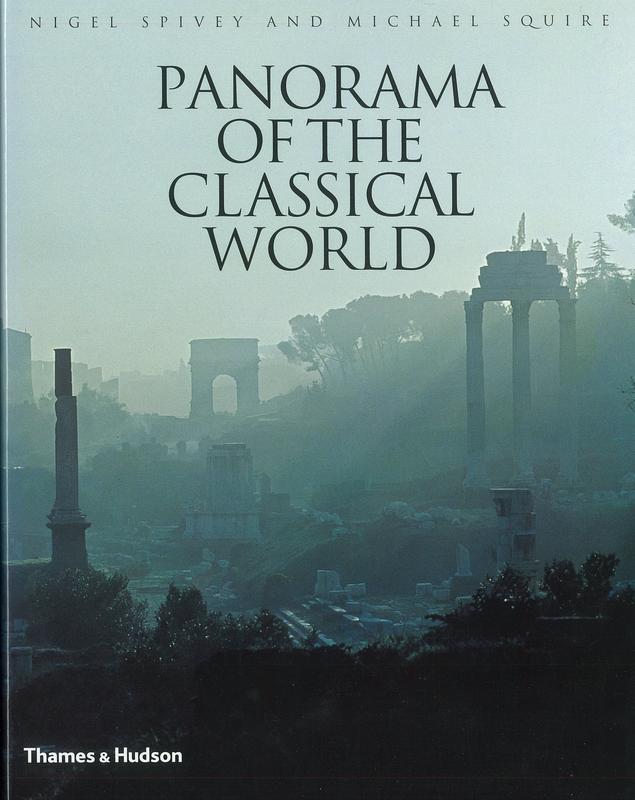
Panorama of the classical world / Nigel Spivey and Michael Squire
This study examines shared themes across Greek, Etruscan and Roman civilisations, focusing on the presentation of the body and the religious roles of gods and heroes.
CONNECTIONS
No connections
LOCATION HISTORY
No location history available for this book.
FULL RECORD
Accession Number: 14388
Site: Vernon O Content
Collection: N/A
Location: N/A
Binding Type: Hard Back
Book Images
Hover to see live images
No live
No live
Vernon Fields
View in Vernon Browser| vernon_accession | 14388 |
| vernon_id | 22700 |
| vernon_slug | panorama-of-the-classical-world-nigel-spivey-and-michael-squire |
| vernon_authors | Nigel Spivey, Michael Squire |
| vernon_tags | Numismatics, Auxiliary sciences of history, Coins, Ancient, Coins, Greek, Coins, Art, Arts, Greece -- History -- To 146 BCE, History, Archaeology, Literature, Philology, Anthropology, Antiquities, Material culture, Culture, Vases, Ancient, Greece -- History, Mythology, Classical, Ethnology -- Italy, Bronzes, Art, Roman, Art, Greek, Art, Aegean, Art, Etruscan, Art, Classical, Classical antiquities, Classical literature, Greek literature, Rome -- Social life and customs, Etruscans |
| vernon_production_date | 2004 |
| vernon_brief_description | Concentrating on themes that run through the whole period and unite Greek, Etruscan and Roman culture. Chapter I begins with the centrality of the body and its presentation. Chapter II turns to the religious framework and looks at gods and heroes. Chapter III shows how beliefs crystallized in myth. Chapter IV considers the natural setting and its manipulation by agriculture. Chapter V deals with man as citizen - of the city (Greece) and the empire (Rome). Chapter VI treats the family, slaves and domestic economy. Chapter VII turns to ideas, the formulations of philosophy that are still with us. Chapter VIII explores the vivid difference between the realms of Dionysos (instinct) and Apollo (intellect). The last two chapters look at the Classical tradition of art (IX), and at the immense influence of the Classical world on later ages, right up to the present day (X). |
| vernon_object_type | Books/Document genres/Information forms/Visual and Verbal Communication |
| vernon_locations | Transit |
| vernon_ob_status | Accessioned |
| vernon_isbn_issn | 0500511853 |
| vernon_subject_people | — |
| vernon_subject_objects | — |
| vernon_subject_classes | — |
| vernon_last_sync_timestamp | 2026-05-08 09:20 |
| vernon_cover_image_id | 24017 |