G:W1:16 5
Edit position
Edit position

Last set 1 hour, 49 minutes ago. Manual moves override automatic placement until the next shelfie/spine match.

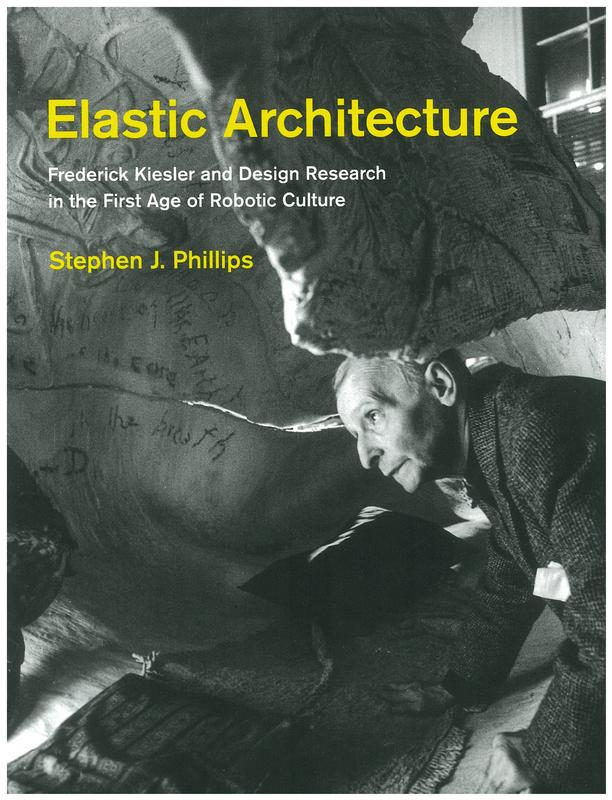
Elastic architecture : Frederick Kiesler and design research in the first age of robotic culture
Diagnose this book
Open in Vernon Browser

Elastic architecture : Frederick Kiesler and design research in the first age of robotic culture

by Stephen J. Phillips

This volume explores Frederick Kiesler's multidisciplinary practice, focusing on his use of organic forms and flexible structures to accommodate the body in motion. It analyses his research-based methodology and its influence on avant-garde and contemporary architecture.

Accession 12658 ISBN 9780262035736 Publisher MIT Press
Book Images
Reference and live side by side Hover to see live images

Reference
Elastic architecture : Frederick Kiesler and design research in the first age of robotic culture spine
Elastic architecture : Frederick Kiesler and design research in the first age of robotic culture cover
Live
Elastic architecture : Frederick Kiesler and design research in the first age of robotic culture live spine
No live
Elastic architecture : Frederick Kiesler and design research in the first age of robotic culture spine Elastic architecture : Frederick Kiesler and design research in the first age of robotic culture live spine
Elastic architecture : Frederick Kiesler and design research in the first age of robotic culture cover
No live
TAGS
Curated Derived
Architecture Art Computer Science Design Economics Engineering Science Technology Writing
CONNECTIONS
No connections
State
on_shelf
True
position_updated_at
2026-06-10 12:58
orientation
vertical
Details

Physical

binding_type
Hard Back
dimensions
none captured
spine_text
none captured

Metadata

Book form
LOCATION HISTORY
G:W1:16 5 Current vertical
1 week ago
1 week ago
Book Location
Updated 1 hour, 49 minutes ago
Vernon snapshot
View live

Frozen copy of Vernon's record from the last sync. Fields tagged flow back into the Pulse record.

Last synced 2026-06-02 08:10 (1 week, 1 day ago)

Identity

name→ title
Elastic architecture : Frederick Kiesler and design research in the first age of robotic culture
vernon_id
19811
accession_no→ accession_number
12658
vernon_slug
elastic-architecture-frederick-kiesler-and-design-research-in-the-first-age-of-robotic-culture-stephen-j-phillips

Drives Pulse state

curr_loc_status→ on_shelf
On Shelf
location_name
Zone W1 (Live bays)/Level 1/Phrontisterion/MONA
location_reason
On Shelf
isbn_issn→ isbn (when valid)
9780262035736

Descriptive

production_date
2017
object_type
Books/Document genres/Information forms/Visual and Verbal Communication
object_status
Accessioned
brief_description
Frederick Kiesler s innovative multidisciplinary practice responded to the ever-changing needs of the body in motion, anticipating the research-oriented practices of contemporary art and architecture.In 1960, the renowned architect Philip Johnson championed Frederick Kiesler, calling him the greatest non-building architect of our time. Kiesler s ideas were difficult to construct, but as Johnson believed, enormous and profound. Kiesler (1890--1965) went against the grain of the accepted modern style, rejecting rectilinear glass and steel in favor of more organic forms and flexible structures that could respond to the ever-changing needs of the body in motion. In Elastic Architecture, Stephen Phillips offers the first in-depth exploration of Kiesler s innovative and multidisciplinary research and design practice. Phillips argues that Kiesler established a new career trajectory for architects not as master builders, but as research practitioners whose innovative means and methods could advance alternative and speculative architecture. Indeed, Kiesler s own career was the ultimate uncompromising model of a research-based practice.Exploring Kiesler s formative relationships with the European avant-garde, Phillips shows how Kiesler found inspiration in the plastic arts, experimental theater, early animation, and automatons to develop and refine his spatial concept of the Endless. Moving from Europe to New York in the 1920s, Kiesler applied these radical Dadaist, constructivist, and surrealist practices to his urban display projects, which included shop windows for Saks Fifth Avenue. After launching his innovative Design Correlation Laboratory at Columbia and Yale, Kiesler went on to invent new houses, theaters, and galleries that were meant to move, shift, and adapt to evolutionary changes occurring within the natural and built environment. As Phillips demonstrates vividly, although many of Kiesler s designs remained unbuilt, his ideas proved influential to later generations of architects and speculative artists internationally, including Archigram, Greg Lynn, UNStudio, and Olafur Eliasson

Subjects & people

authors→ author (initial fill only)
Stephen J. Phillips
tags→ tags
Architecture, Art, Arts, Science, Robotics, Design, Creation (Literary, artistic, etc.), Engineering, Technology, Structural design, Engineering design, Industrial design, Architectural design, Architecture -- Composition, proportion, etc., Art and design, Robots, Environmental engineering, Architecture -- Philosophy, Architecture -- Human factors, Human engineering
subject_people
subject_objects

Cover image

vernon_cover_image_id→ cover_image
20036

Raw Vernon JSON

click to inspect

The source payload behind the snapshot above.

Use ⌘F to search once expanded.
{7 keys}
"slug": "elastic-architecture-frederick-kiesler-and-design-research-in-the-first-age-of-robotic-culture-stephen-j-phillips"
"opacObjectId": "19811"
"opacCollection": {1 keys}
"opacCollectionId": "1"
"imagesCollection": {2 keys}
"images": [1 items]
"[0]": {5 keys}
"imageId": "20036"
"cssColors": [4 items]
"[0]": {9 keys}
"hex": "708090"
"hue": 210
"rank": 1
"presence": 77.97
"colorName": "slategray"
"lightness": 50
"colorGroup": "gray"
"saturation": 13
"formattedColorName": "slate gray"
"[1]": {9 keys}
"hex": "f5f5dc"
"hue": 60
"rank": 2
"presence": 11.23
"colorName": "beige"
"lightness": 91
"colorGroup": "white"
"saturation": 56
"formattedColorName": "beige"
"[2]": {9 keys}
"hex": "808080"
"hue": 0
"rank": 3
"presence": 7.23
"colorName": "gray"
"lightness": 50
"colorGroup": "gray"
"saturation": 0
"formattedColorName": "gray"
"[3]": {9 keys}
"hex": "a9a9a9"
"hue": 0
"rank": 4
"presence": 0.69
"colorName": "darkgray"
"lightness": 66
"colorGroup": "gray"
"saturation": 0
"formattedColorName": "dark gray"
"rawColors": [7 items]
"[0]": {6 keys}
"hex": "3a433d"
"hue": 140
"rank": 1
"presence": 77.97
"lightness": 24
"saturation": 7
"[1]": {6 keys}
"hex": "d8dcc3"
"hue": 69
"rank": 2
"presence": 11.23
"lightness": 81
"saturation": 26
"[2]": {6 keys}
"hex": "828a7e"
"hue": 99
"rank": 3
"presence": 7.23
"lightness": 51
"saturation": 4
"[3]": {6 keys}
"hex": "99a492"
"hue": 96
"rank": 4
"presence": 0.69
"lightness": 60
"saturation": 9
"[4]": {6 keys}
"hex": "9ba5a4"
"hue": 174
"rank": 5
"presence": 0.37
"lightness": 62
"saturation": 5
"[5]": {6 keys}
"hex": "697467"
"hue": 110
"rank": 6
"presence": 1.48
"lightness": 42
"saturation": 5
"[6]": {6 keys}
"hex": "6b7574"
"hue": 174
"rank": 7
"presence": 1.03
"lightness": 43
"saturation": 4
"imageLabels": [6 items]
"[0]": {5 keys}
"count": 19413
"score": 82.38
"status": "auto_verified"
"imageLabel": "Font"
"imageLabelId": 12
"[1]": {5 keys}
"count": 11763
"score": 65.59
"status": "auto_verified"
"imageLabel": "Poster"
"imageLabelId": 21
"[2]": {5 keys}
"count": 1176
"score": 64.92
"status": "auto_verified"
"imageLabel": "Photo caption"
"imageLabelId": 216
"[3]": {5 keys}
"count": 2836
"score": 59.7
"status": "auto_verified"
"imageLabel": "History"
"imageLabelId": 80
"[4]": {5 keys}
"count": 5352
"score": 59.21
"status": "auto_verified"
"imageLabel": "Advertising"
"imageLabelId": 71
"[5]": {5 keys}
"count": 19027
"score": 56.29
"status": "auto_verified"
"imageLabel": "Publication"
"imageLabelId": 23
"imageDerivatives": [6 items]
"[0]": {4 keys}
"url": "https://browser.mona.net.au/records/images/large/6352/535e013213bc8f55f3d7b4aa451f6034164c35a1.jpg"
"width": "612"
"height": "800"
"identifier": "LARGE"
"[1]": {4 keys}
"url": "https://browser.mona.net.au/records/images/medium/6352/535e013213bc8f55f3d7b4aa451f6034164c35a1.jpg"
"width": "306"
"height": "400"
"identifier": "MEDIUM"
"[2]": {4 keys}
"url": "https://browser.mona.net.au/records/images/nano/6352/535e013213bc8f55f3d7b4aa451f6034164c35a1.jpg"
"width": "27"
"height": "35"
"identifier": "NANO"
"[3]": {4 keys}
"url": "https://browser.mona.net.au/records/images/small/6352/535e013213bc8f55f3d7b4aa451f6034164c35a1.jpg"
"width": "115"
"height": "150"
"identifier": "SMALL"
"[4]": {4 keys}
"url": "https://browser.mona.net.au/records/images/tiny/6352/535e013213bc8f55f3d7b4aa451f6034164c35a1.jpg"
"width": "57"
"height": "75"
"identifier": "TINY"
"[5]": {4 keys}
"url": "https://browser.mona.net.au/records/images/xlarge/6352/535e013213bc8f55f3d7b4aa451f6034164c35a1.jpg"
"width": "918"
"height": "1200"
"identifier": "XLARGE"
"totalImages": 1
"objectSearchScore": 1.3200215
"opacObjectFieldSets": [40 items]
"[0]": {2 keys}
"identifier": "accession_no"
"opacObjectFields": [1 items]
"[0]": {1 keys}
"value": "12658"
"[1]": {2 keys}
"identifier": "name"
"opacObjectFields": [1 items]
"[0]": {2 keys}
"value": "Elastic architecture : Frederick Kiesler and design research in the first age of robotic culture / Stephen J. Phillips"
"opacObjectFieldAttributes": [1 items]
"[0]": {2 keys}
"key": "title"
"value": "Elastic architecture : Frederick Kiesler and design research in the first age of robotic culture / Stephen J. Phillips"
"[2]": {2 keys}
"identifier": "other_name"
"opacObjectFields": [1 items]
"[0]": {1 keys}
"value": ""
"[3]": {2 keys}
"identifier": "artist_last_first"
"opacObjectFields": [1 items]
"[0]": {1 keys}
"value": "Phillips, Stephen J."
"[4]": {2 keys}
"identifier": "prod_pri_date"
"opacObjectFields": [1 items]
"[0]": {2 keys}
"value": "2017"
"opacObjectFieldAttributes": [2 items]
"[0]": {2 keys}
"key": "earliest_date"
"value": "2017-01-01Z"
"[1]": {2 keys}
"key": "latest_date"
"value": "2017-12-31Z"
"[5]": {2 keys}
"identifier": "prod_pri_date_notes"
"opacObjectFields": [1 items]
"[0]": {1 keys}
"value": ""
"[6]": {2 keys}
"identifier": "edition"
"opacObjectFields": [1 items]
"[0]": {1 keys}
"value": ""
"[7]": {2 keys}
"identifier": "brief_desc"
"opacObjectFields": [1 items]
"[0]": {1 keys}
"value": "Frederick Kiesler s innovative multidisciplinary practice responded to the ever-changing needs of the body in motion, anticipating the research-oriented practices of contemporary art and architecture.In 1960, the renowned architect Philip Johnson championed Frederick Kiesler, calling him the greatest non-building architect of our time. Kiesler s ideas were difficult to construct, but as Johnson believed, enormous and profound. Kiesler (1890--1965) went against the grain of the accepted modern style, rejecting rectilinear glass and steel in favor of more organic forms and flexible structures that could respond to the ever-changing needs of the body in motion. In Elastic Architecture, Stephen Phillips offers the first in-depth exploration of Kiesler s innovative and multidisciplinary research and design practice. Phillips argues that Kiesler established a new career trajectory for architects not as master builders, but as research practitioners whose innovative means and methods could advance alternative and speculative architecture. Indeed, Kiesler s own career was the ultimate uncompromising model of a research-based practice.Exploring Kiesler s formative relationships with the European avant-garde, Phillips shows how Kiesler found inspiration in the plastic arts, experimental theater, early animation, and automatons to develop and refine his spatial concept of the Endless. Moving from Europe to New York in the 1920s, Kiesler applied these radical Dadaist, constructivist, and surrealist practices to his urban display projects, which included shop windows for Saks Fifth Avenue. After launching his innovative Design Correlation Laboratory at Columbia and Yale, Kiesler went on to invent new houses, theaters, and galleries that were meant to move, shift, and adapt to evolutionary changes occurring within the natural and built environment. As Phillips demonstrates vividly, although many of Kiesler s designs remained unbuilt, his ideas proved influential to later generations of architects and speculative artists internationally, including Archigram, Greg Lynn, UNStudio, and Olafur Eliasson"
"[8]": {2 keys}
"identifier": "measure_desc"
"opacObjectFields": [1 items]
"[0]": {1 keys}
"value": ""
"[9]": {2 keys}
"identifier": "credit_line"
"opacObjectFields": [1 items]
"[0]": {1 keys}
"value": ""
"[10]": {2 keys}
"identifier": "curr_loc_status"
"opacObjectFields": [1 items]
"[0]": {2 keys}
"value": "On Shelf"
"opacObjectFieldAttributes": [1 items]
"[0]": {2 keys}
"key": "search"
"value": "curr_loc_status:"On Shelf""
"[11]": {2 keys}
"identifier": "ob_status"
"opacObjectFields": [1 items]
"[0]": {1 keys}
"value": "Accessioned"
"[12]": {2 keys}
"identifier": "lender"
"opacObjectFields": [1 items]
"[0]": {1 keys}
"value": ""
"[13]": {2 keys}
"identifier": "copyright_owner"
"opacObjectFields": [1 items]
"[0]": {1 keys}
"value": ""
"[14]": {2 keys}
"identifier": "copyright_type"
"opacObjectFields": [1 items]
"[0]": {1 keys}
"value": ""
"[15]": {2 keys}
"identifier": "copyright_start"
"opacObjectFields": [0 items]
"[16]": {2 keys}
"identifier": "copyright_expiry"
"opacObjectFields": [0 items]
"[17]": {2 keys}
"identifier": "copyright_notes"
"opacObjectFields": [1 items]
"[0]": {1 keys}
"value": ""
"[18]": {2 keys}
"identifier": "curr_loc"
"opacObjectFields": [1 items]
"[0]": {1 keys}
"value": "Zone W1 (Live bays)/Level 1/Phrontisterion/MONA"
"[19]": {2 keys}
"identifier": "object_type"
"opacObjectFields": [1 items]
"[0]": {2 keys}
"value": "Books/Document genres/Information forms/Visual and Verbal Communication"
"opacObjectFieldAttributes": [1 items]
"[0]": {2 keys}
"key": "search"
"value": "object_type:"Books/Document genres/Information forms/Visual and Verbal Communication""
"[20]": {2 keys}
"identifier": "collection"
"opacObjectFields": [1 items]
"[0]": {2 keys}
"value": "Main Collection/Library"
"opacObjectFieldAttributes": [1 items]
"[0]": {2 keys}
"key": "search"
"value": "collection:"Main Collection/Library""
"[21]": {2 keys}
"identifier": "prod_pri_place"
"opacObjectFields": [1 items]
"[0]": {1 keys}
"value": "Boston/Massachusetts/United States of America"
"[22]": {2 keys}
"identifier": "prod_pri_publisher"
"opacObjectFields": [1 items]
"[0]": {1 keys}
"value": "MIT Press"
"[23]": {2 keys}
"identifier": "physical_notes"
"opacObjectFields": [2 items]
"[0]": {1 keys}
"value": "xiv, 364pages: illustrations (some colour) ; 24 cm."
"[1]": {1 keys}
"value": "Includes bibligraphical references and index."
"[24]": {2 keys}
"identifier": "language"
"opacObjectFields": [1 items]
"[0]": {1 keys}
"value": "English"
"[25]": {2 keys}
"identifier": "isbn_issn"
"opacObjectFields": [1 items]
"[0]": {1 keys}
"value": "9780262035736"
"[26]": {2 keys}
"identifier": "user_sym_1"
"opacObjectFields": [1 items]
"[0]": {1 keys}
"value": "729 PHI"
"[27]": {2 keys}
"identifier": "usual_loc_being"
"opacObjectFields": [1 items]
"[0]": {1 keys}
"value": "Zone W1 (Live bays)/Level 1/Phrontisterion/MONA"
"[28]": {2 keys}
"identifier": "subject_class"
"opacObjectFields": [9 items]
"[0]": {2 keys}
"value": "Architecture/Art/Arts"
"opacObjectFieldAttributes": [1 items]
"[0]": {2 keys}
"key": "search"
"value": "subject_class:"Architecture/Art/Arts""
"[1]": {2 keys}
"value": "Architecture -- Philosophy/Art/Arts"
"opacObjectFieldAttributes": [1 items]
"[0]": {2 keys}
"key": "search"
"value": "subject_class:"Architecture -- Philosophy/Art/Arts""
"[2]": {2 keys}
"value": "Architecture -- Composition, proportion, etc./Architectural design/Design/Creation (Literary, artistic, etc.)/Art/Arts"
"opacObjectFieldAttributes": [1 items]
"[0]": {2 keys}
"key": "search"
"value": "subject_class:"Architecture -- Composition, proportion, etc./Architectural design/Design/Creation (Literary, artistic, etc.)/Art/Arts""
"[3]": {2 keys}
"value": "Architecture -- Human factors/Human engineering/Environmental engineering/Engineering/Technology/Science"
"opacObjectFieldAttributes": [1 items]
"[0]": {2 keys}
"key": "search"
"value": "subject_class:"Architecture -- Human factors/Human engineering/Environmental engineering/Engineering/Technology/Science""
"[4]": {2 keys}
"value": "Art and design/Design/Creation (Literary, artistic, etc.)/Art/Arts"
"opacObjectFieldAttributes": [1 items]
"[0]": {2 keys}
"key": "search"
"value": "subject_class:"Art and design/Design/Creation (Literary, artistic, etc.)/Art/Arts""
"[5]": {2 keys}
"value": "Architectural design/Design/Creation (Literary, artistic, etc.)/Art/Arts"
"opacObjectFieldAttributes": [1 items]
"[0]": {2 keys}
"key": "search"
"value": "subject_class:"Architectural design/Design/Creation (Literary, artistic, etc.)/Art/Arts""
"[6]": {2 keys}
"value": "Structural design/Engineering design/Industrial design/Design/Creation (Literary, artistic, etc.)/Art/Arts"
"opacObjectFieldAttributes": [1 items]
"[0]": {2 keys}
"key": "search"
"value": "subject_class:"Structural design/Engineering design/Industrial design/Design/Creation (Literary, artistic, etc.)/Art/Arts""
"[7]": {2 keys}
"value": "Design/Creation (Literary, artistic, etc.)/Art/Arts"
"opacObjectFieldAttributes": [1 items]
"[0]": {2 keys}
"key": "search"
"value": "subject_class:"Design/Creation (Literary, artistic, etc.)/Art/Arts""
"[8]": {2 keys}
"value": "Robots/Robotics"
"opacObjectFieldAttributes": [1 items]
"[0]": {2 keys}
"key": "search"
"value": "subject_class:"Robots/Robotics""
"[29]": {2 keys}
"identifier": "subject_date"
"opacObjectFields": [0 items]
"[30]": {2 keys}
"identifier": "subject_event"
"opacObjectFields": [1 items]
"[0]": {1 keys}
"value": ""
"[31]": {2 keys}
"identifier": "subject_period"
"opacObjectFields": [1 items]
"[0]": {1 keys}
"value": ""
"[32]": {2 keys}
"identifier": "subject_object"
"opacObjectFields": [1 items]
"[0]": {1 keys}
"value": ""
"[33]": {2 keys}
"identifier": "subject_person"
"opacObjectFields": [1 items]
"[0]": {1 keys}
"value": ""
"[34]": {2 keys}
"identifier": "subject_place"
"opacObjectFields": [1 items]
"[0]": {1 keys}
"value": ""
"[35]": {2 keys}
"identifier": "assoc_person"
"opacObjectFields": [1 items]
"[0]": {1 keys}
"value": ""
"[36]": {2 keys}
"identifier": "assoc_place"
"opacObjectFields": [1 items]
"[0]": {1 keys}
"value": ""
"[37]": {2 keys}
"identifier": "assoc_event"
"opacObjectFields": [1 items]
"[0]": {1 keys}
"value": ""
"[38]": {2 keys}
"identifier": "assoc_object"
"opacObjectFields": [1 items]
"[0]": {1 keys}
"value": ""
"[39]": {2 keys}
"identifier": "user_sym_9"
"opacObjectFields": [1 items]
"[0]": {1 keys}
"value": ""
"relationshipsCollection": {2 keys}
"relationships": [1 items]
"[0]": {4 keys}
"relatedRecords": [1 items]
"[0]": {3 keys}
"slug": "stephen-j-phillips"
"title": "Stephen J. Phillips"
"relatedRecordId": "25429"
"relationshipId": "object_prod_pri_person"
"relatedRecordType": "person"
"totalRelatedRecords": 1
"totalRelationships": 1
Topics and Themes
