Withdrawn
Edit position
Edit position

No position recorded yet. Picking a shelf here sets the manual override.

Aratus and the astronomical tradition
Diagnose this book
Open in Vernon Browser

Aratus and the astronomical tradition

by Emma Gee

This study examines the influence of Aratus' poem Phaenomena on Western cosmology from the Roman Republic to the sixteenth century. It analyses the integration of astronomical data into abstract thought and the poem's role in representing divine and human order.

Accession 12134 ISBN 9780199781683 Publisher Oxford University Press
Book Images
Reference and live side by side Hover to see live images

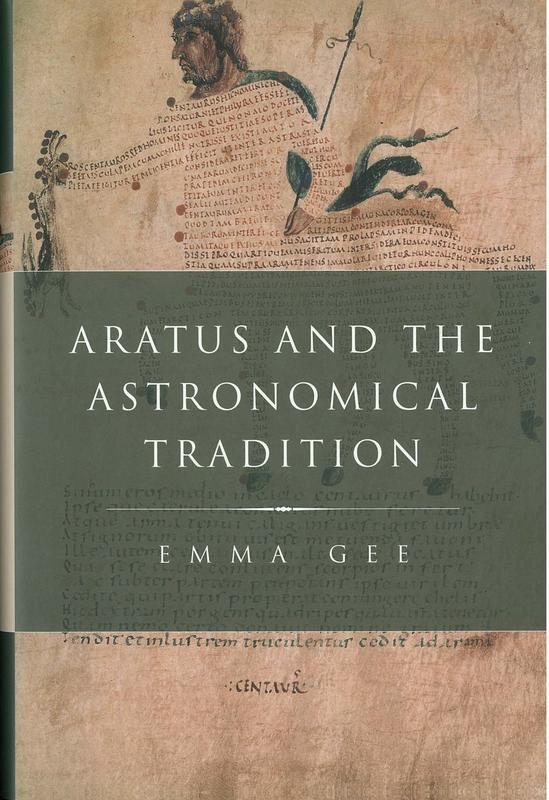
Reference
Aratus and the astronomical tradition spine
Aratus and the astronomical tradition cover
Live
No live
No live
Aratus and the astronomical tradition spine
No live
Aratus and the astronomical tradition cover
No live
TAGS
Curated Derived
Astronomy Communication History Literature Order Poetry Religion Science
CONNECTIONS
No connections
State
on_shelf
False
position_updated_at
never
orientation
unknown
Details

Physical

binding_type
Hard Back
dimensions
none captured
spine_text
none captured

Metadata

Book form
LOCATION HISTORY
No location history available for this book.
Vernon snapshot
View live

Frozen copy of Vernon's record from the last sync. Fields tagged flow back into the Pulse record.

Last synced 2026-06-09 16:30 (20 hours, 27 minutes ago)

Identity

name→ title
Aratus and the astronomical tradition
vernon_id
16269
accession_no→ accession_number
12134
vernon_slug
aratus-and-the-astronomical-tradition-emma-gee

Drives Pulse state

curr_loc_status→ on_shelf
Transit
location_name
Zone N2/Level 1/Phrontisterion/MONA
location_reason
Transit
isbn_issn→ isbn (when valid)
9780199781683

Descriptive

production_date
2013
object_type
Books/Document genres/Information forms/Visual and Verbal Communication
object_status
Accessioned
brief_description
From Plato's time onwards, the stars are most often seen in literature as evidence for a divine plan in the layout and maintenance of the cosmos. Moreover, particularly in the Roman world, divine and human governance came to be linked, one striking manifestation of this being the predicted enjoyment of a celestial afterlife by emperors. Aratus' Phaenomena, a didactic poem in Greek hexameters, composed c. 270 BC, which describes the layout of the heavens and their effect on the lives of men, was an ideal text in expressing such relationships: a didactic model which was both accessible and elegant, and which combined the stars with notions of divine and human order. Across a period extending from the late Roman Republic and early Empire until the age of Christian humanism, the impact of this poem on the literary environment is apparently out of all proportion to its relatively modest size and the obscurity of its subject matter. It was translated into Latin many times between the first century BC and the Renaissance, and carried lasting influence outside its immediate genre. Aratus and the Astronomical Tradition answers the question of Aratus' popularity by looking at the poem in the light of Western cosmology.

Subjects & people

authors→ author (initial fill only)
Emma Gee
tags→ tags
Science, Religions, Religion, History, Literature, Philology, Astronomy, Physical sciences, Cosmology, Mythology, Occultism, Poetry, Astrology and mythology, Astrology
subject_people
subject_objects

Cover image

vernon_cover_image_id→ cover_image
21327

Raw Vernon JSON

click to inspect

The source payload behind the snapshot above.

Use ⌘F to search once expanded.
{7 keys}
"slug": "aratus-and-the-astronomical-tradition-emma-gee"
"opacObjectId": "16269"
"opacCollection": {1 keys}
"opacCollectionId": "1"
"imagesCollection": {2 keys}
"images": [1 items]
"[0]": {5 keys}
"imageId": "21327"
"cssColors": [3 items]
"[0]": {9 keys}
"hex": "808080"
"hue": 0
"rank": 1
"presence": 93.39
"colorName": "gray"
"lightness": 50
"colorGroup": "gray"
"saturation": 0
"formattedColorName": "gray"
"[1]": {9 keys}
"hex": "708090"
"hue": 210
"rank": 2
"presence": 2.25
"colorName": "slategray"
"lightness": 50
"colorGroup": "gray"
"saturation": 13
"formattedColorName": "slate gray"
"[2]": {9 keys}
"hex": "d2b48c"
"hue": 34
"rank": 3
"presence": 2.81
"colorName": "tan"
"lightness": 69
"colorGroup": "brown"
"saturation": 44
"formattedColorName": "tan"
"rawColors": [7 items]
"[0]": {6 keys}
"hex": "8b7e69"
"hue": 37
"rank": 1
"presence": 93.39
"lightness": 47
"saturation": 13
"[1]": {6 keys}
"hex": "343d32"
"hue": 109
"rank": 2
"presence": 2.25
"lightness": 21
"saturation": 9
"[2]": {6 keys}
"hex": "d5af95"
"hue": 24
"rank": 3
"presence": 2.81
"lightness": 70
"saturation": 43
"[3]": {6 keys}
"hex": "e7ebe1"
"hue": 84
"rank": 4
"presence": 1.21
"lightness": 90
"saturation": 20
"[4]": {6 keys}
"hex": "cac4b2"
"hue": 45
"rank": 5
"presence": 0.24
"lightness": 74
"saturation": 18
"[5]": {6 keys}
"hex": "4e3b2d"
"hue": 25
"rank": 6
"presence": 0.05
"lightness": 24
"saturation": 26
"[6]": {6 keys}
"hex": "58442a"
"hue": 33
"rank": 7
"presence": 0.04
"lightness": 25
"saturation": 35
"imageLabels": [10 items]
"[0]": {5 keys}
"count": 15266
"score": 90.15
"status": "auto_verified"
"imageLabel": "Book"
"imageLabelId": 67
"[1]": {5 keys}
"count": 19125
"score": 88.17
"status": "auto_verified"
"imageLabel": "Publication"
"imageLabelId": 23
"[2]": {5 keys}
"count": 19418
"score": 82.89
"status": "auto_verified"
"imageLabel": "Font"
"imageLabelId": 12
"[3]": {5 keys}
"count": 11007
"score": 79.43
"status": "auto_verified"
"imageLabel": "Art"
"imageLabelId": 4
"[4]": {5 keys}
"count": 12779
"score": 74.97
"status": "auto_verified"
"imageLabel": "Book cover"
"imageLabelId": 90
"[5]": {5 keys}
"count": 5935
"score": 71.9
"status": "auto_verified"
"imageLabel": "Illustration"
"imageLabelId": 25
"[6]": {5 keys}
"count": 3473
"score": 69.61
"status": "auto_verified"
"imageLabel": "Paper"
"imageLabelId": 54
"[7]": {5 keys}
"count": 4032
"score": 66.93
"status": "auto_verified"
"imageLabel": "Paper product"
"imageLabelId": 72
"[8]": {5 keys}
"count": 2836
"score": 66.85
"status": "auto_verified"
"imageLabel": "History"
"imageLabelId": 80
"[9]": {5 keys}
"count": 4284
"score": 62.8
"status": "auto_verified"
"imageLabel": "Fiction"
"imageLabelId": 91
"imageDerivatives": [6 items]
"[0]": {4 keys}
"url": "https://browser.mona.net.au/records/images/large/5083/294de76b40dea39c3402391c6b9f8062dedc5189.jpg"
"width": "549"
"height": "800"
"identifier": "LARGE"
"[1]": {4 keys}
"url": "https://browser.mona.net.au/records/images/medium/5083/294de76b40dea39c3402391c6b9f8062dedc5189.jpg"
"width": "274"
"height": "400"
"identifier": "MEDIUM"
"[2]": {4 keys}
"url": "https://browser.mona.net.au/records/images/nano/5083/294de76b40dea39c3402391c6b9f8062dedc5189.jpg"
"width": "24"
"height": "35"
"identifier": "NANO"
"[3]": {4 keys}
"url": "https://browser.mona.net.au/records/images/small/5083/294de76b40dea39c3402391c6b9f8062dedc5189.jpg"
"width": "103"
"height": "150"
"identifier": "SMALL"
"[4]": {4 keys}
"url": "https://browser.mona.net.au/records/images/tiny/5083/294de76b40dea39c3402391c6b9f8062dedc5189.jpg"
"width": "51"
"height": "75"
"identifier": "TINY"
"[5]": {4 keys}
"url": "https://browser.mona.net.au/records/images/xlarge/5083/294de76b40dea39c3402391c6b9f8062dedc5189.jpg"
"width": "823"
"height": "1200"
"identifier": "XLARGE"
"totalImages": 1
"objectSearchScore": 1.3054942
"opacObjectFieldSets": [40 items]
"[0]": {2 keys}
"identifier": "accession_no"
"opacObjectFields": [1 items]
"[0]": {1 keys}
"value": "12134"
"[1]": {2 keys}
"identifier": "name"
"opacObjectFields": [1 items]
"[0]": {2 keys}
"value": "Aratus and the astronomical tradition / Emma Gee"
"opacObjectFieldAttributes": [1 items]
"[0]": {2 keys}
"key": "title"
"value": "Aratus and the astronomical tradition / Emma Gee"
"[2]": {2 keys}
"identifier": "other_name"
"opacObjectFields": [1 items]
"[0]": {1 keys}
"value": ""
"[3]": {2 keys}
"identifier": "artist_last_first"
"opacObjectFields": [1 items]
"[0]": {1 keys}
"value": "Gee, Emma"
"[4]": {2 keys}
"identifier": "prod_pri_date"
"opacObjectFields": [1 items]
"[0]": {2 keys}
"value": "2013"
"opacObjectFieldAttributes": [2 items]
"[0]": {2 keys}
"key": "earliest_date"
"value": "2013-01-01Z"
"[1]": {2 keys}
"key": "latest_date"
"value": "2013-12-31Z"
"[5]": {2 keys}
"identifier": "prod_pri_date_notes"
"opacObjectFields": [1 items]
"[0]": {1 keys}
"value": ""
"[6]": {2 keys}
"identifier": "edition"
"opacObjectFields": [1 items]
"[0]": {1 keys}
"value": ""
"[7]": {2 keys}
"identifier": "brief_desc"
"opacObjectFields": [3 items]
"[0]": {1 keys}
"value": "From Plato's time onwards, the stars are most often seen in literature as evidence for a divine plan in the layout and maintenance of the cosmos. Moreover, particularly in the Roman world, divine and human governance came to be linked, one striking manifestation of this being the predicted enjoyment of a celestial afterlife by emperors. Aratus' Phaenomena, a didactic poem in Greek hexameters, composed c. 270 BC, which describes the layout of the heavens and their effect on the lives of men, was an ideal text in expressing such relationships: a didactic model which was both accessible and elegant, and which combined the stars with notions of divine and human order. Across a period extending from the late Roman Republic and early Empire until the age of Christian humanism, the impact of this poem on the literary environment is apparently out of all proportion to its relatively modest size and the obscurity of its subject matter. It was translated into Latin many times between the first century BC and the Renaissance, and carried lasting influence outside its immediate genre."
"[1]": {1 keys}
"value": ""
"[2]": {1 keys}
"value": "Aratus and the Astronomical Tradition answers the question of Aratus' popularity by looking at the poem in the light of Western cosmology."
"[8]": {2 keys}
"identifier": "measure_desc"
"opacObjectFields": [1 items]
"[0]": {1 keys}
"value": ""
"[9]": {2 keys}
"identifier": "credit_line"
"opacObjectFields": [1 items]
"[0]": {1 keys}
"value": ""
"[10]": {2 keys}
"identifier": "curr_loc_status"
"opacObjectFields": [1 items]
"[0]": {2 keys}
"value": "Transit"
"opacObjectFieldAttributes": [1 items]
"[0]": {2 keys}
"key": "search"
"value": "curr_loc_status:"Transit""
"[11]": {2 keys}
"identifier": "ob_status"
"opacObjectFields": [1 items]
"[0]": {1 keys}
"value": "Accessioned"
"[12]": {2 keys}
"identifier": "lender"
"opacObjectFields": [1 items]
"[0]": {1 keys}
"value": ""
"[13]": {2 keys}
"identifier": "copyright_owner"
"opacObjectFields": [1 items]
"[0]": {1 keys}
"value": ""
"[14]": {2 keys}
"identifier": "copyright_type"
"opacObjectFields": [1 items]
"[0]": {1 keys}
"value": ""
"[15]": {2 keys}
"identifier": "copyright_start"
"opacObjectFields": [0 items]
"[16]": {2 keys}
"identifier": "copyright_expiry"
"opacObjectFields": [0 items]
"[17]": {2 keys}
"identifier": "copyright_notes"
"opacObjectFields": [1 items]
"[0]": {1 keys}
"value": ""
"[18]": {2 keys}
"identifier": "curr_loc"
"opacObjectFields": [1 items]
"[0]": {1 keys}
"value": "Zone N2/Level 1/Phrontisterion/MONA"
"[19]": {2 keys}
"identifier": "object_type"
"opacObjectFields": [1 items]
"[0]": {2 keys}
"value": "Books/Document genres/Information forms/Visual and Verbal Communication"
"opacObjectFieldAttributes": [1 items]
"[0]": {2 keys}
"key": "search"
"value": "object_type:"Books/Document genres/Information forms/Visual and Verbal Communication""
"[20]": {2 keys}
"identifier": "collection"
"opacObjectFields": [1 items]
"[0]": {2 keys}
"value": "Greece, Rome and Byzantium Collection/Special Collections/Library"
"opacObjectFieldAttributes": [1 items]
"[0]": {2 keys}
"key": "search"
"value": "collection:"Greece, Rome and Byzantium Collection/Special Collections/Library""
"[21]": {2 keys}
"identifier": "prod_pri_place"
"opacObjectFields": [1 items]
"[0]": {1 keys}
"value": "Oxford/England"
"[22]": {2 keys}
"identifier": "prod_pri_publisher"
"opacObjectFields": [1 items]
"[0]": {1 keys}
"value": "Oxford University Press"
"[23]": {2 keys}
"identifier": "physical_notes"
"opacObjectFields": [2 items]
"[0]": {1 keys}
"value": "xi, 299 pages : illustrations ; 25 cm."
"[1]": {1 keys}
"value": "Includes bibliographical references and index."
"[24]": {2 keys}
"identifier": "language"
"opacObjectFields": [1 items]
"[0]": {1 keys}
"value": "English"
"[25]": {2 keys}
"identifier": "isbn_issn"
"opacObjectFields": [1 items]
"[0]": {1 keys}
"value": "9780199781683"
"[26]": {2 keys}
"identifier": "user_sym_1"
"opacObjectFields": [1 items]
"[0]": {1 keys}
"value": "GRB 881.01 GEE"
"[27]": {2 keys}
"identifier": "usual_loc_being"
"opacObjectFields": [1 items]
"[0]": {1 keys}
"value": "Open Shelving/Library/Roundhouse Complex"
"[28]": {2 keys}
"identifier": "subject_class"
"opacObjectFields": [6 items]
"[0]": {2 keys}
"value": "Astronomy/Physical sciences/Science"
"opacObjectFieldAttributes": [1 items]
"[0]": {2 keys}
"key": "search"
"value": "subject_class:"Astronomy/Physical sciences/Science""
"[1]": {2 keys}
"value": "Cosmology/Astronomy/Physical sciences/Science"
"opacObjectFieldAttributes": [1 items]
"[0]": {2 keys}
"key": "search"
"value": "subject_class:"Cosmology/Astronomy/Physical sciences/Science""
"[2]": {2 keys}
"value": "Astrology and mythology/Mythology/Religion"
"opacObjectFieldAttributes": [1 items]
"[0]": {2 keys}
"key": "search"
"value": "subject_class:"Astrology and mythology/Mythology/Religion""
"[3]": {2 keys}
"value": "Astrology/Occultism/Religions"
"opacObjectFieldAttributes": [1 items]
"[0]": {2 keys}
"key": "search"
"value": "subject_class:"Astrology/Occultism/Religions""
"[4]": {2 keys}
"value": "Poetry/Literature/Philology"
"opacObjectFieldAttributes": [1 items]
"[0]": {2 keys}
"key": "search"
"value": "subject_class:"Poetry/Literature/Philology""
"[5]": {2 keys}
"value": "History"
"opacObjectFieldAttributes": [1 items]
"[0]": {2 keys}
"key": "search"
"value": "subject_class:"History""
"[29]": {2 keys}
"identifier": "subject_date"
"opacObjectFields": [0 items]
"[30]": {2 keys}
"identifier": "subject_event"
"opacObjectFields": [1 items]
"[0]": {1 keys}
"value": ""
"[31]": {2 keys}
"identifier": "subject_period"
"opacObjectFields": [1 items]
"[0]": {1 keys}
"value": ""
"[32]": {2 keys}
"identifier": "subject_object"
"opacObjectFields": [1 items]
"[0]": {1 keys}
"value": ""
"[33]": {2 keys}
"identifier": "subject_person"
"opacObjectFields": [1 items]
"[0]": {1 keys}
"value": ""
"[34]": {2 keys}
"identifier": "subject_place"
"opacObjectFields": [1 items]
"[0]": {1 keys}
"value": ""
"[35]": {2 keys}
"identifier": "assoc_person"
"opacObjectFields": [1 items]
"[0]": {1 keys}
"value": ""
"[36]": {2 keys}
"identifier": "assoc_place"
"opacObjectFields": [1 items]
"[0]": {1 keys}
"value": ""
"[37]": {2 keys}
"identifier": "assoc_event"
"opacObjectFields": [1 items]
"[0]": {1 keys}
"value": ""
"[38]": {2 keys}
"identifier": "assoc_object"
"opacObjectFields": [1 items]
"[0]": {1 keys}
"value": ""
"[39]": {2 keys}
"identifier": "user_sym_9"
"opacObjectFields": [1 items]
"[0]": {1 keys}
"value": ""
"relationshipsCollection": {2 keys}
"relationships": [1 items]
"[0]": {4 keys}
"relatedRecords": [1 items]
"[0]": {3 keys}
"slug": "emma-gee"
"title": "Emma Gee"
"relatedRecordId": "24517"
"relationshipId": "object_prod_pri_person"
"relatedRecordType": "person"
"totalRelatedRecords": 1
"totalRelationships": 1
Topics and Themes