G:W1:2 2
Edit position
Edit position

Last set 7 minutes ago. Manual moves override automatic placement until the next shelfie/spine match.

The blank slate : the modern denial of human nature
Diagnose this book
Open in Vernon Browser

The blank slate : the modern denial of human nature

by Steven Pinker

This work examines the concept of human nature, challenging the theory that the mind has no innate traits. It explores how scientific evidence of biological predispositions influences the understanding of morality, politics, and social behaviour.

Accession 12073 ISBN 0670031518 Publisher Viking
Book Images
Reference and live side by side Hover to see live images

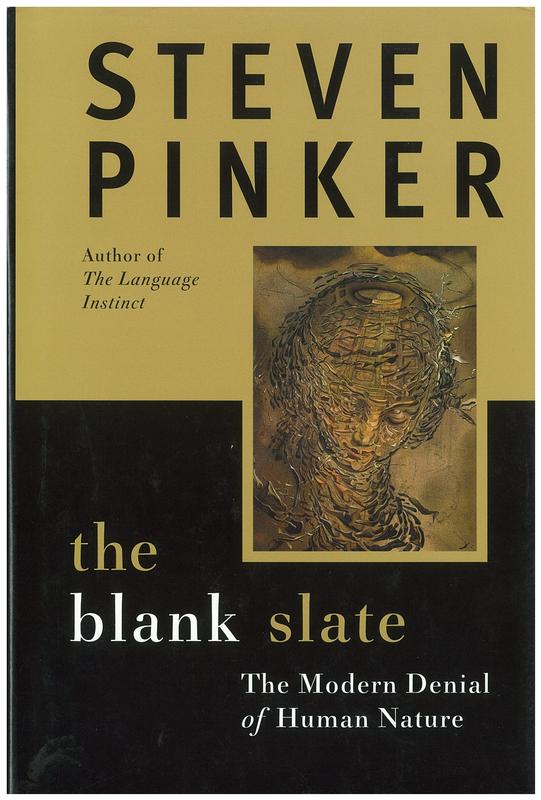
Reference
The blank slate : the modern denial of human nature spine
The blank slate : the modern denial of human nature cover
Live
The blank slate : the modern denial of human nature live spine
No live
The blank slate : the modern denial of human nature spine The blank slate : the modern denial of human nature live spine
The blank slate : the modern denial of human nature cover
No live
TAGS
Curated Derived
Humanity Nature Philosophy Psychology Science Social Sciences The Mind
CONNECTIONS
No connections
State
on_shelf
True
position_updated_at
2026-06-10 19:09
orientation
vertical
Details

Physical

binding_type
Hard Back
dimensions
241.00 (H) × 165.00 (W) × 44.00 (T) mm
spine_text
none captured

Metadata

Book form
LOCATION HISTORY
G:W1:2 2 Current vertical
1 week, 2 days ago
2 weeks, 6 days ago
3 weeks, 6 days ago
3 weeks, 6 days ago
3 weeks, 6 days ago
4 weeks, 1 day ago
4 weeks, 1 day ago
4 weeks, 1 day ago
Unknown location vertical
4 weeks, 2 days ago
Unknown location vertical
4 weeks, 2 days ago
Book Location
Updated 7 minutes ago
Vernon snapshot
View live

Frozen copy of Vernon's record from the last sync. Fields tagged flow back into the Pulse record.

Last synced 2026-05-21 00:56 (2 weeks, 6 days ago)

Identity

name→ title
The blank slate : the modern denial of human nature
vernon_id
16207
accession_no→ accession_number
12073
vernon_slug
the-blank-slate-the-modern-denial-of-human-nature-steven-pinker

Drives Pulse state

curr_loc_status→ on_shelf
On Shelf
location_name
Zone W1 (Live bays)/Level 1/Phrontisterion/MONA
location_reason
On Shelf
isbn_issn→ isbn (when valid)
0670031518

Descriptive

production_date
2002
object_type
Books/Document genres/Information forms/Visual and Verbal Communication
object_status
Accessioned
brief_description
In The Blank Slate, Steven Pinker explores the idea of human nature and its moral, emotional, and political colorings. He shows how many intellectuals have denied the existence of human nature by embracing three linked dogmas: the Blank Slate (the mind has no innate traits), the Noble Savage (people are born good and corrupted by society), and the Ghost in the Machine (each of us has a soul that makes choices free from biology). Each dogma carries a moral burden, so their defenders have engaged in desperate tactics to discredit the scientists who are now challenging them. Pinker injects calm and rationality into these debates by showing that equality, progress, responsibility, and purpose have nothing to fear from discoveries about a rich human nature. He disarms even the most menacing threats with clear thinking, common sense, and pertinent facts from science and history. Despite its popularity among intellectuals during much of the twentieth century, he argues, the doctrine of the Blank Slate may have done more harm than good. It denies our common humanity and our individual preferences, replaces hardheaded analyses of social problems with feel-good slogans, and distorts our understanding of government, violence, parenting, and the arts. Pinker shows that an acknowledgement of human nature that is grounded in science and common sense, far from being dangerous, can complement insights about the human condition made by millennia of artists and philosophers. All this is done in the style that earned his previous books many prizes and worldwide acclaim: wit, lucidity, and insight into matters great and small.

Subjects & people

authors→ author (initial fill only)
Steven Pinker
tags→ tags
Psychology, Philosophy, Life, Cognition, Mind and body, Philosophical anthropology, Cognitive psychology
subject_people
subject_objects

Cover image

vernon_cover_image_id→ cover_image
19406

Raw Vernon JSON

click to inspect

The source payload behind the snapshot above.

Use ⌘F to search once expanded.
{7 keys}
"slug": "the-blank-slate-the-modern-denial-of-human-nature-steven-pinker"
"opacObjectId": "16207"
"opacCollection": {1 keys}
"opacCollectionId": "1"
"imagesCollection": {2 keys}
"images": [1 items]
"[0]": {5 keys}
"imageId": "19406"
"cssColors": [3 items]
"[0]": {9 keys}
"hex": "bdb76b"
"hue": 56
"rank": 1
"presence": 35.87
"colorName": "darkkhaki"
"lightness": 58
"colorGroup": "yellow"
"saturation": 38
"formattedColorName": "dark khaki"
"[1]": {9 keys}
"hex": "000000"
"hue": 0
"rank": 2
"presence": 48.87
"colorName": "black"
"lightness": 0
"colorGroup": "gray"
"saturation": 0
"formattedColorName": "black"
"[2]": {9 keys}
"hex": "cd853f"
"hue": 30
"rank": 3
"presence": 9.71
"colorName": "peru"
"lightness": 53
"colorGroup": "brown"
"saturation": 59
"formattedColorName": "peru"
"rawColors": [7 items]
"[0]": {6 keys}
"hex": "bfac6c"
"hue": 46
"rank": 1
"presence": 35.87
"lightness": 58
"saturation": 39
"[1]": {6 keys}
"hex": "211e18"
"hue": 40
"rank": 2
"presence": 48.87
"lightness": 11
"saturation": 15
"[2]": {6 keys}
"hex": "a89b62"
"hue": 48
"rank": 3
"presence": 3.38
"lightness": 52
"saturation": 28
"[3]": {6 keys}
"hex": "7e6b44"
"hue": 40
"rank": 4
"presence": 9.71
"lightness": 38
"saturation": 29
"[4]": {6 keys}
"hex": "60583f"
"hue": 45
"rank": 5
"presence": 2.12
"lightness": 31
"saturation": 20
"[5]": {6 keys}
"hex": "8c8c8c"
"hue": 0
"rank": 6
"presence": 0.05
"lightness": 54
"saturation": 0
"[6]": {6 keys}
"hex": "b4845c"
"hue": 27
"rank": 7
"presence": 0.0
"lightness": 53
"saturation": 36
"imageLabels": [10 items]
"[0]": {5 keys}
"count": 19018
"score": 85.35
"status": "auto_verified"
"imageLabel": "Publication"
"imageLabelId": 23
"[1]": {5 keys}
"count": 19411
"score": 82.03
"status": "auto_verified"
"imageLabel": "Font"
"imageLabelId": 12
"[2]": {5 keys}
"count": 15171
"score": 76.92
"status": "auto_verified"
"imageLabel": "Book"
"imageLabelId": 67
"[3]": {5 keys}
"count": 11760
"score": 76.52
"status": "auto_verified"
"imageLabel": "Poster"
"imageLabelId": 21
"[4]": {5 keys}
"count": 12694
"score": 72.42
"status": "auto_verified"
"imageLabel": "Book cover"
"imageLabelId": 90
"[5]": {5 keys}
"count": 11006
"score": 70.99
"status": "auto_verified"
"imageLabel": "Art"
"imageLabelId": 4
"[6]": {5 keys}
"count": 2836
"score": 66.17
"status": "auto_verified"
"imageLabel": "History"
"imageLabelId": 80
"[7]": {5 keys}
"count": 5931
"score": 64.18
"status": "auto_verified"
"imageLabel": "Illustration"
"imageLabelId": 25
"[8]": {5 keys}
"count": 4262
"score": 58.5
"status": "auto_verified"
"imageLabel": "Fiction"
"imageLabelId": 91
"[9]": {5 keys}
"count": 1482
"score": 56.88
"status": "auto_verified"
"imageLabel": "Drawing"
"imageLabelId": 62
"imageDerivatives": [6 items]
"[0]": {4 keys}
"url": "https://browser.mona.net.au/records/images/large/5007/a3dc85cfc3ee3bd3d726485a16e6015a7a8c6416.jpg"
"width": "541"
"height": "800"
"identifier": "LARGE"
"[1]": {4 keys}
"url": "https://browser.mona.net.au/records/images/medium/5007/a3dc85cfc3ee3bd3d726485a16e6015a7a8c6416.jpg"
"width": "270"
"height": "400"
"identifier": "MEDIUM"
"[2]": {4 keys}
"url": "https://browser.mona.net.au/records/images/nano/5007/a3dc85cfc3ee3bd3d726485a16e6015a7a8c6416.jpg"
"width": "24"
"height": "35"
"identifier": "NANO"
"[3]": {4 keys}
"url": "https://browser.mona.net.au/records/images/small/5007/a3dc85cfc3ee3bd3d726485a16e6015a7a8c6416.jpg"
"width": "101"
"height": "150"
"identifier": "SMALL"
"[4]": {4 keys}
"url": "https://browser.mona.net.au/records/images/tiny/5007/a3dc85cfc3ee3bd3d726485a16e6015a7a8c6416.jpg"
"width": "51"
"height": "75"
"identifier": "TINY"
"[5]": {4 keys}
"url": "https://browser.mona.net.au/records/images/xlarge/5007/a3dc85cfc3ee3bd3d726485a16e6015a7a8c6416.jpg"
"width": "811"
"height": "1200"
"identifier": "XLARGE"
"totalImages": 1
"objectSearchScore": 0.3118719
"opacObjectFieldSets": [40 items]
"[0]": {2 keys}
"identifier": "accession_no"
"opacObjectFields": [1 items]
"[0]": {1 keys}
"value": "12073"
"[1]": {2 keys}
"identifier": "name"
"opacObjectFields": [1 items]
"[0]": {2 keys}
"value": "The blank slate : the modern denial of human nature / Steven Pinker"
"opacObjectFieldAttributes": [1 items]
"[0]": {2 keys}
"key": "title"
"value": "The blank slate : the modern denial of human nature / Steven Pinker"
"[2]": {2 keys}
"identifier": "other_name"
"opacObjectFields": [1 items]
"[0]": {1 keys}
"value": ""
"[3]": {2 keys}
"identifier": "artist_last_first"
"opacObjectFields": [1 items]
"[0]": {1 keys}
"value": "Pinker, Steven"
"[4]": {2 keys}
"identifier": "prod_pri_date"
"opacObjectFields": [1 items]
"[0]": {2 keys}
"value": "2002"
"opacObjectFieldAttributes": [2 items]
"[0]": {2 keys}
"key": "earliest_date"
"value": "2002-01-01Z"
"[1]": {2 keys}
"key": "latest_date"
"value": "2002-12-31Z"
"[5]": {2 keys}
"identifier": "prod_pri_date_notes"
"opacObjectFields": [1 items]
"[0]": {1 keys}
"value": ""
"[6]": {2 keys}
"identifier": "edition"
"opacObjectFields": [1 items]
"[0]": {1 keys}
"value": ""
"[7]": {2 keys}
"identifier": "brief_desc"
"opacObjectFields": [5 items]
"[0]": {1 keys}
"value": "In The Blank Slate, Steven Pinker explores the idea of human nature and its moral, emotional, and political colorings. He shows how many intellectuals have denied the existence of human nature by embracing three linked dogmas: the Blank Slate (the mind has no innate traits), the Noble Savage (people are born good and corrupted by society), and the Ghost in the Machine (each of us has a soul that makes choices free from biology). Each dogma carries a moral burden, so their defenders have engaged in desperate tactics to discredit the scientists who are now challenging them."
"[1]": {1 keys}
"value": ""
"[2]": {1 keys}
"value": "Pinker injects calm and rationality into these debates by showing that equality, progress, responsibility, and purpose have nothing to fear from discoveries about a rich human nature. He disarms even the most menacing threats with clear thinking, common sense, and pertinent facts from science and history. Despite its popularity among intellectuals during much of the twentieth century, he argues, the doctrine of the Blank Slate may have done more harm than good. It denies our common humanity and our individual preferences, replaces hardheaded analyses of social problems with feel-good slogans, and distorts our understanding of government, violence, parenting, and the arts."
"[3]": {1 keys}
"value": ""
"[4]": {1 keys}
"value": "Pinker shows that an acknowledgement of human nature that is grounded in science and common sense, far from being dangerous, can complement insights about the human condition made by millennia of artists and philosophers. All this is done in the style that earned his previous books many prizes and worldwide acclaim: wit, lucidity, and insight into matters great and small."
"[8]": {2 keys}
"identifier": "measure_desc"
"opacObjectFields": [1 items]
"[0]": {1 keys}
"value": ""
"[9]": {2 keys}
"identifier": "credit_line"
"opacObjectFields": [1 items]
"[0]": {1 keys}
"value": ""
"[10]": {2 keys}
"identifier": "curr_loc_status"
"opacObjectFields": [1 items]
"[0]": {2 keys}
"value": "On Shelf"
"opacObjectFieldAttributes": [1 items]
"[0]": {2 keys}
"key": "search"
"value": "curr_loc_status:"On Shelf""
"[11]": {2 keys}
"identifier": "ob_status"
"opacObjectFields": [1 items]
"[0]": {1 keys}
"value": "Accessioned"
"[12]": {2 keys}
"identifier": "lender"
"opacObjectFields": [1 items]
"[0]": {1 keys}
"value": ""
"[13]": {2 keys}
"identifier": "copyright_owner"
"opacObjectFields": [1 items]
"[0]": {1 keys}
"value": ""
"[14]": {2 keys}
"identifier": "copyright_type"
"opacObjectFields": [1 items]
"[0]": {1 keys}
"value": ""
"[15]": {2 keys}
"identifier": "copyright_start"
"opacObjectFields": [0 items]
"[16]": {2 keys}
"identifier": "copyright_expiry"
"opacObjectFields": [0 items]
"[17]": {2 keys}
"identifier": "copyright_notes"
"opacObjectFields": [1 items]
"[0]": {1 keys}
"value": ""
"[18]": {2 keys}
"identifier": "curr_loc"
"opacObjectFields": [1 items]
"[0]": {1 keys}
"value": "Zone W1 (Live bays)/Level 1/Phrontisterion/MONA"
"[19]": {2 keys}
"identifier": "object_type"
"opacObjectFields": [1 items]
"[0]": {2 keys}
"value": "Books/Document genres/Information forms/Visual and Verbal Communication"
"opacObjectFieldAttributes": [1 items]
"[0]": {2 keys}
"key": "search"
"value": "object_type:"Books/Document genres/Information forms/Visual and Verbal Communication""
"[20]": {2 keys}
"identifier": "collection"
"opacObjectFields": [1 items]
"[0]": {2 keys}
"value": "Main Collection/Library"
"opacObjectFieldAttributes": [1 items]
"[0]": {2 keys}
"key": "search"
"value": "collection:"Main Collection/Library""
"[21]": {2 keys}
"identifier": "prod_pri_place"
"opacObjectFields": [1 items]
"[0]": {1 keys}
"value": "New York City/New York/United States of America"
"[22]": {2 keys}
"identifier": "prod_pri_publisher"
"opacObjectFields": [1 items]
"[0]": {1 keys}
"value": "Viking"
"[23]": {2 keys}
"identifier": "physical_notes"
"opacObjectFields": [2 items]
"[0]": {1 keys}
"value": "xvi, 519 pages : illustrations ; 25 cm."
"[1]": {1 keys}
"value": "Inlcudes bibliography and index."
"[24]": {2 keys}
"identifier": "language"
"opacObjectFields": [1 items]
"[0]": {1 keys}
"value": "English"
"[25]": {2 keys}
"identifier": "isbn_issn"
"opacObjectFields": [1 items]
"[0]": {1 keys}
"value": "0670031518"
"[26]": {2 keys}
"identifier": "user_sym_1"
"opacObjectFields": [1 items]
"[0]": {1 keys}
"value": "155.234 PIN"
"[27]": {2 keys}
"identifier": "usual_loc_being"
"opacObjectFields": [1 items]
"[0]": {1 keys}
"value": "Zone W1 (Live bays)/Level 1/Phrontisterion/MONA"
"[28]": {2 keys}
"identifier": "subject_class"
"opacObjectFields": [4 items]
"[0]": {2 keys}
"value": "Cognition/Psychology"
"opacObjectFieldAttributes": [1 items]
"[0]": {2 keys}
"key": "search"
"value": "subject_class:"Cognition/Psychology""
"[1]": {2 keys}
"value": "Cognitive psychology/Psychology"
"opacObjectFieldAttributes": [1 items]
"[0]": {2 keys}
"key": "search"
"value": "subject_class:"Cognitive psychology/Psychology""
"[2]": {2 keys}
"value": "Mind and body/Philosophical anthropology/Life"
"opacObjectFieldAttributes": [1 items]
"[0]": {2 keys}
"key": "search"
"value": "subject_class:"Mind and body/Philosophical anthropology/Life""
"[3]": {2 keys}
"value": "Philosophy"
"opacObjectFieldAttributes": [1 items]
"[0]": {2 keys}
"key": "search"
"value": "subject_class:"Philosophy""
"[29]": {2 keys}
"identifier": "subject_date"
"opacObjectFields": [0 items]
"[30]": {2 keys}
"identifier": "subject_event"
"opacObjectFields": [1 items]
"[0]": {1 keys}
"value": ""
"[31]": {2 keys}
"identifier": "subject_period"
"opacObjectFields": [1 items]
"[0]": {1 keys}
"value": ""
"[32]": {2 keys}
"identifier": "subject_object"
"opacObjectFields": [1 items]
"[0]": {1 keys}
"value": ""
"[33]": {2 keys}
"identifier": "subject_person"
"opacObjectFields": [1 items]
"[0]": {1 keys}
"value": ""
"[34]": {2 keys}
"identifier": "subject_place"
"opacObjectFields": [1 items]
"[0]": {1 keys}
"value": ""
"[35]": {2 keys}
"identifier": "assoc_person"
"opacObjectFields": [1 items]
"[0]": {1 keys}
"value": ""
"[36]": {2 keys}
"identifier": "assoc_place"
"opacObjectFields": [1 items]
"[0]": {1 keys}
"value": ""
"[37]": {2 keys}
"identifier": "assoc_event"
"opacObjectFields": [1 items]
"[0]": {1 keys}
"value": ""
"[38]": {2 keys}
"identifier": "assoc_object"
"opacObjectFields": [1 items]
"[0]": {1 keys}
"value": ""
"[39]": {2 keys}
"identifier": "user_sym_9"
"opacObjectFields": [1 items]
"[0]": {1 keys}
"value": ""
"relationshipsCollection": {2 keys}
"relationships": [1 items]
"[0]": {4 keys}
"relatedRecords": [1 items]
"[0]": {3 keys}
"slug": "steven-pinker"
"title": "Steven Pinker"
"relatedRecordId": "11961"
"relationshipId": "object_prod_pri_person"
"relatedRecordType": "person"
"totalRelatedRecords": 1
"totalRelationships": 1
Topics and Themes
