M:N4:3 4
Edit position
Edit position

Last set 6 days, 10 hours ago. Manual moves override automatic placement until the next shelfie/spine match.

The lost civilizations of the Stone Age
Diagnose this book
Open in Vernon Browser

The lost civilizations of the Stone Age

by Richard Rudgley

This book challenges the conventional view of the Stone Age as minimally civilised, highlighting the technological and intellectual achievements of its peoples. It explores early advancements ranging from constellation mapping to innovative boat building.

Accession 1169 ISBN 0684855801 Publisher Free Press
Book Images
Reference and live side by side Hover to see live images

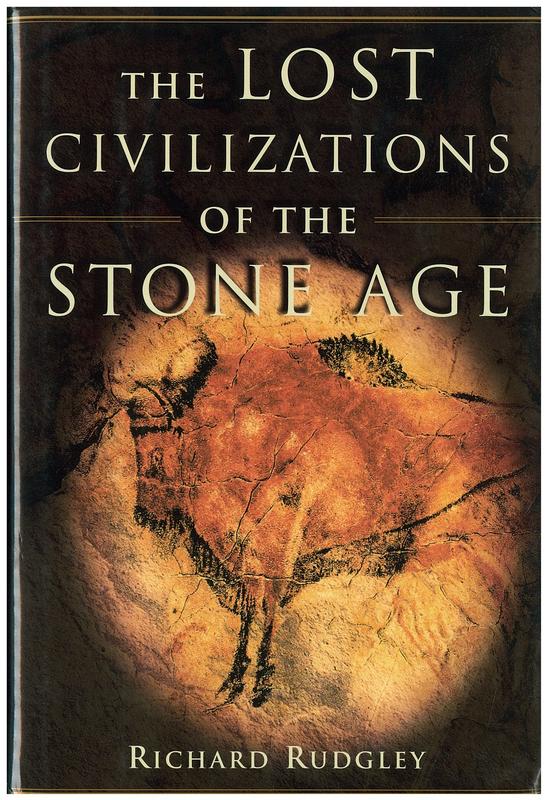
Reference
The lost civilizations of the Stone Age spine
The lost civilizations of the Stone Age cover
Live
The lost civilizations of the Stone Age live spine
No live
The lost civilizations of the Stone Age spine The lost civilizations of the Stone Age live spine
The lost civilizations of the Stone Age cover
No live
TAGS
Curated Derived
Art Communication Culture Economics History Religion Science Sculpture Social Sciences Writing
CONNECTIONS
No connections
State
on_shelf
True
position_updated_at
2026-06-04 10:32
orientation
vertical
Details

Physical

binding_type
Hard Back
dimensions
none captured
spine_text
none captured

Metadata

Book form
LOCATION HISTORY
M:N4:3 4 Current vertical
6 days, 10 hours ago
1 week, 6 days ago
2 weeks, 6 days ago
Book Location
Updated 6 days, 10 hours ago
Vernon snapshot
View live

Frozen copy of Vernon's record from the last sync. Fields tagged flow back into the Pulse record.

Last synced 2026-05-21 02:31 (2 weeks, 6 days ago)

Identity

name→ title
The lost civilizations of the Stone Age
vernon_id
5059
accession_no→ accession_number
1169
vernon_slug
the-lost-civilizations-of-the-stone-age-richard-rudgley

Drives Pulse state

curr_loc_status→ on_shelf
On Shelf
location_name
Zone N4/Level 2 (Mezzanine)/Phrontisterion/MONA
location_reason
On Shelf
isbn_issn→ isbn (when valid)
0684855801

Descriptive

production_date
1999
object_type
Books/Document genres/Information forms/Visual and Verbal Communication
object_status
Accessioned
brief_description
Synopsis: In this book, Rudgley describes how the intrepid explorers of the Stone Age discovered all of the world's major land masses long before the so-called Age of Discovery. Stone Age man made precisely sized tools, and used proto-abacuses to count and measure. He performed medical operations including amputations and delicate cranial surgeries. Neanderthals not only domesticated fire for heat and light, but experimented with lichen and moss fuels. In the visual arts, the Paleolithic cave artists of western Europe used techniques forgotten until the Renaissance. Picasso himself is said to have remarked after visiting Lascaux, "We have invented nothing!" The Lost Civilizations of the Stone Age shows the greatness of the debt that contemporary society owes to its prehistoric predecessors. It is a rich introduction to a lost world that will redefine the meaning of civilization itself. Review: Among historians, one of the most widely accepted criteria for a society's being "civilized" is whether it has a writing system, one that permits complex record keeping and allows for an account of the past. By that measure, writes British museologist Richard Rudgley, many societies of the most ancient Stone Age are to be reckoned as civilizations, for new archaeological evidence suggests that the Neolithic writing systems of cultures like Mesopotamia and the Nile valley have their roots in even older systems, some dating back to the time of the Neanderthals. (Just what those writing systems say remains a matter of debate, and Rudgley acknowledges that "if a script cannot be deciphered, then it will always be possible to dismiss it.") Prehistoric sign systems aside, Rudgley urges that the chronology of human cultural evolution be pushed back well into the Paleolithic; "the most fundamental cultural innovations," he suggests, "actually occurred far earlier in the overall sequence [of human development] than is generally realized." He maintains, for instance, that fired pottery, another characteristic of civilized societies, existed among Siberian nomads some 13,000 years ago, and that a knowledge of metallurgy existed in Egypt 35,000 years ago. Any call for a revision in widely accepted chronologies is, of course, sure to be controversial among prehistorians, and Rudgley's book, well reasoned as it is, will provoke debate. --Gregory McNamee

Subjects & people

authors→ author (initial fill only)
Richard Rudgley
tags→ tags
Art, Arts, Science, Religion, Sculpture, History, Social sciences, Civilisation, Sociology, Writing, Language and languages, Communication, Culture, Technology, Manners and customs, Neolithic period, Stone age
subject_people
subject_objects

Cover image

vernon_cover_image_id→ cover_image
52389

Raw Vernon JSON

click to inspect

The source payload behind the snapshot above.

Use ⌘F to search once expanded.
{7 keys}
"slug": "the-lost-civilizations-of-the-stone-age-richard-rudgley"
"opacObjectId": "5059"
"opacCollection": {1 keys}
"opacCollectionId": "1"
"imagesCollection": {2 keys}
"images": [2 items]
"[0]": {5 keys}
"imageId": "52389"
"cssColors": [5 items]
"[0]": {9 keys}
"hex": "cd853f"
"hue": 30
"rank": 1
"presence": 31.9
"colorName": "peru"
"lightness": 53
"colorGroup": "brown"
"saturation": 59
"formattedColorName": "peru"
"[1]": {9 keys}
"hex": "000000"
"hue": 0
"rank": 2
"presence": 55.79
"colorName": "black"
"lightness": 0
"colorGroup": "gray"
"saturation": 0
"formattedColorName": "black"
"[2]": {9 keys}
"hex": "a0522d"
"hue": 19
"rank": 3
"presence": 10.99
"colorName": "sienna"
"lightness": 40
"colorGroup": "brown"
"saturation": 56
"formattedColorName": "sienna"
"[3]": {9 keys}
"hex": "a9a9a9"
"hue": 0
"rank": 4
"presence": 0.59
"colorName": "darkgray"
"lightness": 66
"colorGroup": "gray"
"saturation": 0
"formattedColorName": "dark gray"
"[4]": {9 keys}
"hex": "696969"
"hue": 0
"rank": 5
"presence": 0.65
"colorName": "dimgray"
"lightness": 41
"colorGroup": "gray"
"saturation": 0
"formattedColorName": "dim gray"
"rawColors": [7 items]
"[0]": {6 keys}
"hex": "d19768"
"hue": 26
"rank": 1
"presence": 31.9
"lightness": 61
"saturation": 53
"[1]": {6 keys}
"hex": "271f18"
"hue": 28
"rank": 2
"presence": 55.79
"lightness": 12
"saturation": 23
"[2]": {6 keys}
"hex": "85593c"
"hue": 23
"rank": 3
"presence": 10.99
"lightness": 37
"saturation": 37
"[3]": {6 keys}
"hex": "969991"
"hue": 82
"rank": 4
"presence": 0.59
"lightness": 58
"saturation": 3
"[4]": {6 keys}
"hex": "61635d"
"hue": 80
"rank": 5
"presence": 0.65
"lightness": 37
"saturation": 3
"[5]": {6 keys}
"hex": "888b8c"
"hue": 195
"rank": 6
"presence": 0.08
"lightness": 54
"saturation": 1
"[6]": {6 keys}
"hex": "a63c24"
"hue": 11
"rank": 7
"presence": 0.0
"lightness": 39
"saturation": 64
"imageLabels": [2 items]
"[0]": {5 keys}
"count": 19018
"score": 69.29
"status": "auto_verified"
"imageLabel": "Publication"
"imageLabelId": 23
"[1]": {5 keys}
"count": 4954
"score": 54.12
"status": "auto_verified"
"imageLabel": "Science"
"imageLabelId": 180
"imageDerivatives": [6 items]
"[0]": {4 keys}
"url": "https://browser.mona.net.au/records/images/large/33946/024d0e805cbfc7df603f2ab80466cebde1f88889.jpg"
"width": "547"
"height": "800"
"identifier": "LARGE"
"[1]": {4 keys}
"url": "https://browser.mona.net.au/records/images/medium/33946/024d0e805cbfc7df603f2ab80466cebde1f88889.jpg"
"width": "273"
"height": "400"
"identifier": "MEDIUM"
"[2]": {4 keys}
"url": "https://browser.mona.net.au/records/images/nano/33946/024d0e805cbfc7df603f2ab80466cebde1f88889.jpg"
"width": "24"
"height": "35"
"identifier": "NANO"
"[3]": {4 keys}
"url": "https://browser.mona.net.au/records/images/small/33946/024d0e805cbfc7df603f2ab80466cebde1f88889.jpg"
"width": "102"
"height": "150"
"identifier": "SMALL"
"[4]": {4 keys}
"url": "https://browser.mona.net.au/records/images/tiny/33946/024d0e805cbfc7df603f2ab80466cebde1f88889.jpg"
"width": "51"
"height": "75"
"identifier": "TINY"
"[5]": {4 keys}
"url": "https://browser.mona.net.au/records/images/xlarge/33946/024d0e805cbfc7df603f2ab80466cebde1f88889.jpg"
"width": "820"
"height": "1200"
"identifier": "XLARGE"
"[1]": {4 keys}
"imageId": "19353"
"cssColors": [5 items]
"[0]": {9 keys}
"hex": "cd853f"
"hue": 30
"rank": 1
"presence": 31.9
"colorName": "peru"
"lightness": 53
"colorGroup": "brown"
"saturation": 59
"formattedColorName": "peru"
"[1]": {9 keys}
"hex": "000000"
"hue": 0
"rank": 2
"presence": 55.79
"colorName": "black"
"lightness": 0
"colorGroup": "gray"
"saturation": 0
"formattedColorName": "black"
"[2]": {9 keys}
"hex": "a0522d"
"hue": 19
"rank": 3
"presence": 10.99
"colorName": "sienna"
"lightness": 40
"colorGroup": "brown"
"saturation": 56
"formattedColorName": "sienna"
"[3]": {9 keys}
"hex": "a9a9a9"
"hue": 0
"rank": 4
"presence": 0.59
"colorName": "darkgray"
"lightness": 66
"colorGroup": "gray"
"saturation": 0
"formattedColorName": "dark gray"
"[4]": {9 keys}
"hex": "696969"
"hue": 0
"rank": 5
"presence": 0.65
"colorName": "dimgray"
"lightness": 41
"colorGroup": "gray"
"saturation": 0
"formattedColorName": "dim gray"
"rawColors": [7 items]
"[0]": {6 keys}
"hex": "d19768"
"hue": 26
"rank": 1
"presence": 31.9
"lightness": 61
"saturation": 53
"[1]": {6 keys}
"hex": "271f18"
"hue": 28
"rank": 2
"presence": 55.79
"lightness": 12
"saturation": 23
"[2]": {6 keys}
"hex": "85593c"
"hue": 23
"rank": 3
"presence": 10.99
"lightness": 37
"saturation": 37
"[3]": {6 keys}
"hex": "969991"
"hue": 82
"rank": 4
"presence": 0.59
"lightness": 58
"saturation": 3
"[4]": {6 keys}
"hex": "61635d"
"hue": 80
"rank": 5
"presence": 0.65
"lightness": 37
"saturation": 3
"[5]": {6 keys}
"hex": "888b8c"
"hue": 195
"rank": 6
"presence": 0.08
"lightness": 54
"saturation": 1
"[6]": {6 keys}
"hex": "a63c24"
"hue": 11
"rank": 7
"presence": 0.0
"lightness": 39
"saturation": 64
"imageDerivatives": [6 items]
"[0]": {4 keys}
"url": "https://browser.mona.net.au/records/images/large/13373/024d0e805cbfc7df603f2ab80466cebde1f88889.jpg"
"width": "547"
"height": "800"
"identifier": "LARGE"
"[1]": {4 keys}
"url": "https://browser.mona.net.au/records/images/medium/13373/024d0e805cbfc7df603f2ab80466cebde1f88889.jpg"
"width": "273"
"height": "400"
"identifier": "MEDIUM"
"[2]": {4 keys}
"url": "https://browser.mona.net.au/records/images/nano/13373/024d0e805cbfc7df603f2ab80466cebde1f88889.jpg"
"width": "24"
"height": "35"
"identifier": "NANO"
"[3]": {4 keys}
"url": "https://browser.mona.net.au/records/images/small/13373/024d0e805cbfc7df603f2ab80466cebde1f88889.jpg"
"width": "102"
"height": "150"
"identifier": "SMALL"
"[4]": {4 keys}
"url": "https://browser.mona.net.au/records/images/tiny/13373/024d0e805cbfc7df603f2ab80466cebde1f88889.jpg"
"width": "51"
"height": "75"
"identifier": "TINY"
"[5]": {4 keys}
"url": "https://browser.mona.net.au/records/images/xlarge/13373/024d0e805cbfc7df603f2ab80466cebde1f88889.jpg"
"width": "820"
"height": "1200"
"identifier": "XLARGE"
"totalImages": 2
"objectSearchScore": 0.3118719
"opacObjectFieldSets": [40 items]
"[0]": {2 keys}
"identifier": "accession_no"
"opacObjectFields": [1 items]
"[0]": {1 keys}
"value": "1169"
"[1]": {2 keys}
"identifier": "name"
"opacObjectFields": [1 items]
"[0]": {2 keys}
"value": "The lost civilizations of the Stone Age / Richard Rudgley"
"opacObjectFieldAttributes": [1 items]
"[0]": {2 keys}
"key": "title"
"value": "The lost civilizations of the Stone Age / Richard Rudgley"
"[2]": {2 keys}
"identifier": "other_name"
"opacObjectFields": [1 items]
"[0]": {1 keys}
"value": ""
"[3]": {2 keys}
"identifier": "artist_last_first"
"opacObjectFields": [1 items]
"[0]": {1 keys}
"value": "Rudgley, Richard"
"[4]": {2 keys}
"identifier": "prod_pri_date"
"opacObjectFields": [1 items]
"[0]": {2 keys}
"value": "1999"
"opacObjectFieldAttributes": [2 items]
"[0]": {2 keys}
"key": "earliest_date"
"value": "1999-01-01Z"
"[1]": {2 keys}
"key": "latest_date"
"value": "1999-12-31Z"
"[5]": {2 keys}
"identifier": "prod_pri_date_notes"
"opacObjectFields": [1 items]
"[0]": {1 keys}
"value": ""
"[6]": {2 keys}
"identifier": "edition"
"opacObjectFields": [1 items]
"[0]": {1 keys}
"value": ""
"[7]": {2 keys}
"identifier": "brief_desc"
"opacObjectFields": [6 items]
"[0]": {1 keys}
"value": ""
"[1]": {1 keys}
"value": "Synopsis:"
"[2]": {1 keys}
"value": "In this book, Rudgley describes how the intrepid explorers of the Stone Age discovered all of the world's major land masses long before the so-called Age of Discovery. Stone Age man made precisely sized tools, and used proto-abacuses to count and measure. He performed medical operations including amputations and delicate cranial surgeries. Neanderthals not only domesticated fire for heat and light, but experimented with lichen and moss fuels. In the visual arts, the Paleolithic cave artists of western Europe used techniques forgotten until the Renaissance. Picasso himself is said to have remarked after visiting Lascaux, "We have invented nothing!" The Lost Civilizations of the Stone Age shows the greatness of the debt that contemporary society owes to its prehistoric predecessors. It is a rich introduction to a lost world that will redefine the meaning of civilization itself."
"[3]": {1 keys}
"value": ""
"[4]": {1 keys}
"value": "Review:"
"[5]": {1 keys}
"value": "Among historians, one of the most widely accepted criteria for a society's being "civilized" is whether it has a writing system, one that permits complex record keeping and allows for an account of the past. By that measure, writes British museologist Richard Rudgley, many societies of the most ancient Stone Age are to be reckoned as civilizations, for new archaeological evidence suggests that the Neolithic writing systems of cultures like Mesopotamia and the Nile valley have their roots in even older systems, some dating back to the time of the Neanderthals. (Just what those writing systems say remains a matter of debate, and Rudgley acknowledges that "if a script cannot be deciphered, then it will always be possible to dismiss it.") Prehistoric sign systems aside, Rudgley urges that the chronology of human cultural evolution be pushed back well into the Paleolithic; "the most fundamental cultural innovations," he suggests, "actually occurred far earlier in the overall sequence [of human development] than is generally realized." He maintains, for instance, that fired pottery, another characteristic of civilized societies, existed among Siberian nomads some 13,000 years ago, and that a knowledge of metallurgy existed in Egypt 35,000 years ago. Any call for a revision in widely accepted chronologies is, of course, sure to be controversial among prehistorians, and Rudgley's book, well reasoned as it is, will provoke debate. --Gregory McNamee"
"[8]": {2 keys}
"identifier": "measure_desc"
"opacObjectFields": [1 items]
"[0]": {1 keys}
"value": ""
"[9]": {2 keys}
"identifier": "credit_line"
"opacObjectFields": [1 items]
"[0]": {1 keys}
"value": ""
"[10]": {2 keys}
"identifier": "curr_loc_status"
"opacObjectFields": [1 items]
"[0]": {2 keys}
"value": "On Shelf"
"opacObjectFieldAttributes": [1 items]
"[0]": {2 keys}
"key": "search"
"value": "curr_loc_status:"On Shelf""
"[11]": {2 keys}
"identifier": "ob_status"
"opacObjectFields": [1 items]
"[0]": {1 keys}
"value": "Accessioned"
"[12]": {2 keys}
"identifier": "lender"
"opacObjectFields": [1 items]
"[0]": {1 keys}
"value": ""
"[13]": {2 keys}
"identifier": "copyright_owner"
"opacObjectFields": [1 items]
"[0]": {1 keys}
"value": ""
"[14]": {2 keys}
"identifier": "copyright_type"
"opacObjectFields": [1 items]
"[0]": {1 keys}
"value": ""
"[15]": {2 keys}
"identifier": "copyright_start"
"opacObjectFields": [0 items]
"[16]": {2 keys}
"identifier": "copyright_expiry"
"opacObjectFields": [0 items]
"[17]": {2 keys}
"identifier": "copyright_notes"
"opacObjectFields": [1 items]
"[0]": {1 keys}
"value": ""
"[18]": {2 keys}
"identifier": "curr_loc"
"opacObjectFields": [1 items]
"[0]": {1 keys}
"value": "Zone N4/Level 2 (Mezzanine)/Phrontisterion/MONA"
"[19]": {2 keys}
"identifier": "object_type"
"opacObjectFields": [1 items]
"[0]": {2 keys}
"value": "Books/Document genres/Information forms/Visual and Verbal Communication"
"opacObjectFieldAttributes": [1 items]
"[0]": {2 keys}
"key": "search"
"value": "object_type:"Books/Document genres/Information forms/Visual and Verbal Communication""
"[20]": {2 keys}
"identifier": "collection"
"opacObjectFields": [1 items]
"[0]": {2 keys}
"value": "Main Collection/Library"
"opacObjectFieldAttributes": [1 items]
"[0]": {2 keys}
"key": "search"
"value": "collection:"Main Collection/Library""
"[21]": {2 keys}
"identifier": "prod_pri_place"
"opacObjectFields": [1 items]
"[0]": {1 keys}
"value": "New York City/New York/United States of America"
"[22]": {2 keys}
"identifier": "prod_pri_publisher"
"opacObjectFields": [1 items]
"[0]": {1 keys}
"value": "Free Press"
"[23]": {2 keys}
"identifier": "physical_notes"
"opacObjectFields": [2 items]
"[0]": {1 keys}
"value": "310 pages : illustrations ; 25 cm."
"[1]": {1 keys}
"value": "Includes bibliographical references and index."
"[24]": {2 keys}
"identifier": "language"
"opacObjectFields": [1 items]
"[0]": {1 keys}
"value": "English"
"[25]": {2 keys}
"identifier": "isbn_issn"
"opacObjectFields": [1 items]
"[0]": {1 keys}
"value": "0684855801"
"[26]": {2 keys}
"identifier": "user_sym_1"
"opacObjectFields": [1 items]
"[0]": {1 keys}
"value": "930.12 RUD"
"[27]": {2 keys}
"identifier": "usual_loc_being"
"opacObjectFields": [1 items]
"[0]": {1 keys}
"value": "Zone N4/Level 2 (Mezzanine)/Phrontisterion/MONA"
"[28]": {2 keys}
"identifier": "subject_class"
"opacObjectFields": [12 items]
"[0]": {2 keys}
"value": "Art/Arts"
"opacObjectFieldAttributes": [1 items]
"[0]": {2 keys}
"key": "search"
"value": "subject_class:"Art/Arts""
"[1]": {2 keys}
"value": "Civilisation"
"opacObjectFieldAttributes": [1 items]
"[0]": {2 keys}
"key": "search"
"value": "subject_class:"Civilisation""
"[2]": {2 keys}
"value": "Culture"
"opacObjectFieldAttributes": [1 items]
"[0]": {2 keys}
"key": "search"
"value": "subject_class:"Culture""
"[3]": {2 keys}
"value": "History"
"opacObjectFieldAttributes": [1 items]
"[0]": {2 keys}
"key": "search"
"value": "subject_class:"History""
"[4]": {2 keys}
"value": "Language and languages/Communication/Sociology/Social sciences/Civilisation"
"opacObjectFieldAttributes": [1 items]
"[0]": {2 keys}
"key": "search"
"value": "subject_class:"Language and languages/Communication/Sociology/Social sciences/Civilisation""
"[5]": {2 keys}
"value": "Manners and customs/Civilisation"
"opacObjectFieldAttributes": [1 items]
"[0]": {2 keys}
"key": "search"
"value": "subject_class:"Manners and customs/Civilisation""
"[6]": {2 keys}
"value": "Neolithic period/Stone age/Civilisation"
"opacObjectFieldAttributes": [1 items]
"[0]": {2 keys}
"key": "search"
"value": "subject_class:"Neolithic period/Stone age/Civilisation""
"[7]": {2 keys}
"value": "Religion"
"opacObjectFieldAttributes": [1 items]
"[0]": {2 keys}
"key": "search"
"value": "subject_class:"Religion""
"[8]": {2 keys}
"value": "Sculpture/Art/Arts"
"opacObjectFieldAttributes": [1 items]
"[0]": {2 keys}
"key": "search"
"value": "subject_class:"Sculpture/Art/Arts""
"[9]": {2 keys}
"value": "Stone age/Civilisation"
"opacObjectFieldAttributes": [1 items]
"[0]": {2 keys}
"key": "search"
"value": "subject_class:"Stone age/Civilisation""
"[10]": {2 keys}
"value": "Technology/Science"
"opacObjectFieldAttributes": [1 items]
"[0]": {2 keys}
"key": "search"
"value": "subject_class:"Technology/Science""
"[11]": {2 keys}
"value": "Writing/Language and languages/Communication/Sociology/Social sciences/Civilisation"
"opacObjectFieldAttributes": [1 items]
"[0]": {2 keys}
"key": "search"
"value": "subject_class:"Writing/Language and languages/Communication/Sociology/Social sciences/Civilisation""
"[29]": {2 keys}
"identifier": "subject_date"
"opacObjectFields": [0 items]
"[30]": {2 keys}
"identifier": "subject_event"
"opacObjectFields": [1 items]
"[0]": {1 keys}
"value": ""
"[31]": {2 keys}
"identifier": "subject_period"
"opacObjectFields": [1 items]
"[0]": {1 keys}
"value": ""
"[32]": {2 keys}
"identifier": "subject_object"
"opacObjectFields": [1 items]
"[0]": {1 keys}
"value": ""
"[33]": {2 keys}
"identifier": "subject_person"
"opacObjectFields": [1 items]
"[0]": {1 keys}
"value": ""
"[34]": {2 keys}
"identifier": "subject_place"
"opacObjectFields": [4 items]
"[0]": {2 keys}
"value": "Sumer (ancient kingdom)"
"opacObjectFieldAttributes": [1 items]
"[0]": {2 keys}
"key": "search"
"value": "subject_place:"Sumer (ancient kingdom)""
"[1]": {2 keys}
"value": "Mesopotamia (historical region)"
"opacObjectFieldAttributes": [1 items]
"[0]": {2 keys}
"key": "search"
"value": "subject_place:"Mesopotamia (historical region)""
"[2]": {2 keys}
"value": "Crete/Greece"
"opacObjectFieldAttributes": [1 items]
"[0]": {2 keys}
"key": "search"
"value": "subject_place:"Crete/Greece""
"[3]": {2 keys}
"value": "Erech (Extinct city) [Uruk]/Mesopotamia (historical region)"
"opacObjectFieldAttributes": [1 items]
"[0]": {2 keys}
"key": "search"
"value": "subject_place:"Erech (Extinct city) [Uruk]/Mesopotamia (historical region)""
"[35]": {2 keys}
"identifier": "assoc_person"
"opacObjectFields": [1 items]
"[0]": {1 keys}
"value": ""
"[36]": {2 keys}
"identifier": "assoc_place"
"opacObjectFields": [1 items]
"[0]": {1 keys}
"value": ""
"[37]": {2 keys}
"identifier": "assoc_event"
"opacObjectFields": [1 items]
"[0]": {1 keys}
"value": ""
"[38]": {2 keys}
"identifier": "assoc_object"
"opacObjectFields": [1 items]
"[0]": {1 keys}
"value": ""
"[39]": {2 keys}
"identifier": "user_sym_9"
"opacObjectFields": [1 items]
"[0]": {1 keys}
"value": ""
"relationshipsCollection": {2 keys}
"relationships": [1 items]
"[0]": {4 keys}
"relatedRecords": [1 items]
"[0]": {3 keys}
"slug": "richard-rudgley"
"title": "Richard Rudgley"
"relatedRecordId": "9052"
"relationshipId": "object_prod_pri_person"
"relatedRecordType": "person"
"totalRelatedRecords": 1
"totalRelationships": 1
Topics and Themes
