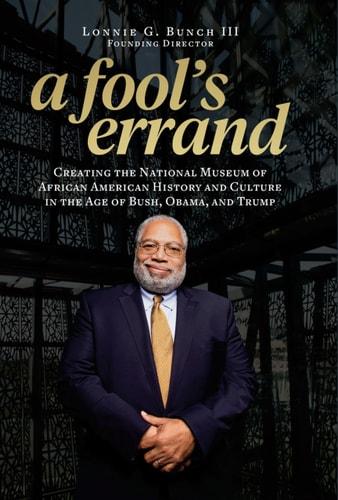
1. **African American History & Cultural Identity**
   The book is rooted in Bunch's conviction that the Black experience is not a footnote but a central thread of American identity. The museum was built to honor contributions, struggles, and achievements that had long been excluded from mainstream national narratives — from Civil War veterans to the Great Migration to the civil rights movement.

   The museum's core argument is that you cannot understand America without understanding African American history.

   Connect to books about: African American history, the Great Migration, civil rights movement, Black cultural studies, Black intellectual thought.

---

2. **Historical Memory, Commemoration & Collective Identity**
   A driving force of the book is the question of what a nation chooses to remember — and what it suppresses. Bunch grapples with the responsibility of historians and institutions to preserve difficult truths, not just comfortable ones. The century-long campaign to establish a Black presence on the National Mall is itself a story about whose memory gets honored in public space.

   The central tension is: a nation's identity is shaped as much by what it forgets as by what it memorializes.

   Connect to books about: public memory, monuments and memorials, heritage preservation, history wars, the politics of commemoration.

---

3. **Museum Studies, Curation & Public History**
   The book is an insider account of building a major cultural institution from scratch — navigating decisions about site selection, architectural design, artifact collection, and exhibition philosophy. Bunch reflects deeply on how museums can humanize history and make it emotionally resonant, not merely informative.

   The curatorial challenge explored is: how do you exhibit painful, contested history in a way that is honest, dignified, and transformative for visitors?

   Connect to books about: museum theory and practice, curatorial ethics, exhibition design, public history, heritage institutions.

---

4. **Race, Politics & the American State**
   Bunch had to navigate three presidential administrations — Bush, Obama, and Trump — each presenting radically different political climates for a project centered on Black history. The book explores how race and politics intersect at the highest levels of government, from congressional opposition to the symbolism of a Black museum on the National Mall during Obama's presidency.

   The political dimension of the book asks: can institutions dedicated to racial justice thrive within — or despite — political systems that have historically marginalized Black Americans?

   Connect to books about: race and American politics, the Obama presidency, systemic racism, civil rights legislation, racial justice.

---

5. **Institutional Leadership, Vision & Nonprofit Management**
   Bunch's story is also a practical leadership memoir — a blueprint for how to build something monumental against enormous odds, including funding battles, bureaucratic friction, and political opposition. His experience navigating the Smithsonian's complex institutional culture adds another layer of organizational insight.

   The leadership lesson embedded throughout is: realizing a bold vision requires equal parts passion, political savvy, coalition-building, and resilience.

   Connect to books about: nonprofit leadership, organizational change, institutional development, fundraising, cultural administration.

---

6. **Architecture, Space & the Politics of Place**
   The physical form of the museum — its landmark corona design by David Adjaye, its placement on the National Mall, and its relationship to surrounding monuments — is treated as a deliberate statement of cultural belonging and legitimacy. The fight over where the building would stand was itself a fight over who belongs at the symbolic center of American civic life.

   The spatial argument of the book is: where a building stands, and what it looks like, is never politically neutral.

   Connect to books about: architecture and power, civic space, landscape and memory, the politics of urban design, public monuments.

---

7. **Memoir, Personal Identity & the Historian's Vocation**
   The book weaves together Bunch's personal biography — his grandfather's origins as a sharecropper, his father's career constrained by racism, his own formation as a historian — with the institutional story of the museum. His sense of personal mission is inseparable from his professional one.

   The autobiographical thread of the book poses the question: how does one's own family history and racial identity shape their life's work and scholarly purpose?

   Connect to books about: memoir and autobiography, African American biography, the historian's craft, identity and vocation, intellectual life.

---

8. **Counternarrative, Representation & the Politics of Culture**
   The museum was conceived from its earliest roots — going back to 1915 — as a deliberate counternarrative to racist stereotypes and erasure in media, advertising, and public life. Bunch understood the museum not just as