1. **Craft Cocktail Revival & Mixology as Culinary Art**
The book sits at the heart of the early 21st-century cocktail renaissance, treating drink-making with the same precision and creativity applied to haute cuisine. Meehan's meticulous testing of spirit brands, proportions, and techniques frames bartending as a serious culinary discipline, not mere service work.

The book's central argument is: cocktail craft, when practiced with rigor and intentionality, is as legitimate and complex an art form as any other branch of the culinary arts.

Connect to books about: mixology technique, culinary arts, food science, flavor pairing, fermentation.

---

2. **Prohibition, Speakeasies & American Drinking History**
PDT's entire identity is built on the aesthetics and mythology of Prohibition-era speakeasies — hidden entrances, secret access, and an atmosphere of exclusivity that deliberately echoes a defining chapter in American social and legal history.

The bar and book together serve as a living argument that Prohibition's legacy shaped not just what Americans drink, but how and where they drink it.

Connect to books about: Prohibition history, American social history, alcohol law and policy, temperance movements, the Jazz Age.

---

3. **Bar Design, Hospitality & the Experience Economy**
Beyond recipes, the book covers bar design, tools, equipment, and service philosophy in depth — arguing that the physical environment and guest experience are as important as what's in the glass. The PDT phone-booth entrance is itself a piece of experiential design.

The book implies that a great bar is a total designed environment, where atmosphere, ritual, and service combine into something greater than the sum of its parts.

Connect to books about: hospitality management, restaurant and bar design, experience economy, customer service, spatial design.

---

4. **Cocktail History & the Canon of Classic Recipes**
The book draws on recipes and techniques ranging back into the 19th century, paying homage to historical cocktail texts like the Savoy Cocktail Book, while also documenting new originals. It positions itself as a historical document of its own moment in drinks culture.

This tension between preservation and innovation — honoring the classics while pushing the craft forward — is the book's most persistent intellectual thread.

Connect to books about: culinary history, food and drink heritage, recipe documentation, cultural preservation, historical bartending manuals.

---

5. **Craft, Mastery & Professional Identity**
Meehan's personal narrative — working his way up through notable New York establishments before founding his own celebrated bar — frames the book as a meditation on what it means to master a craft and build a professional identity around it.

The book implicitly asks: what does it take to become truly excellent at a skilled, service-based trade, and how does one turn craft knowledge into an institution?

Connect to books about: apprenticeship and mastery, professional identity, the psychology of expertise, chef and artisan memoirs.

---

6. **New York City Food & Drink Culture**
PDT is inseparable from its East Village location, and the book is steeped in the specific energy of New York's early 2000s restaurant and bar scene — referencing iconic establishments like Gramercy Tavern and The Pegu Club as formative institutions.

The book functions as a cultural document of a particular moment and place in New York's evolution as a global food and drink capital.

Connect to books about: New York City food culture, urban restaurant history, neighborhood change and gentrification, food media.

---

7. **Illustration, Visual Design & the Art of the Book**
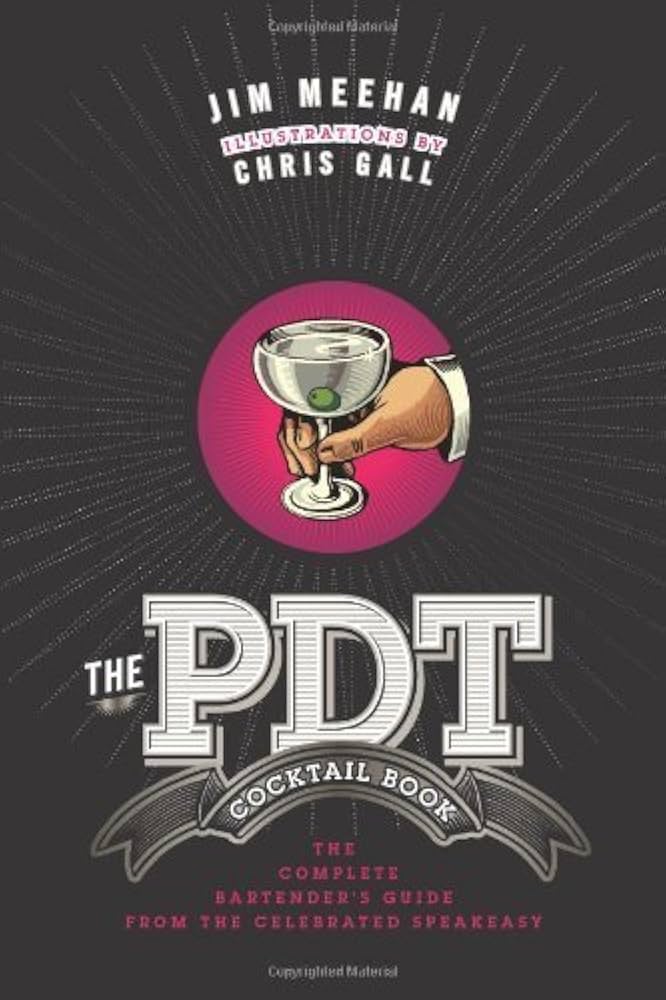
Illustrated throughout by artist Chris Gall, the book is as much a designed object as a practical guide — blurring the line between reference manual and coffee-table art book. The visual identity of PDT is treated as integral to the bar's meaning, not decorative afterthought.

The book raises the question of how visual art and typography shape the way we understand and value craft knowledge.

Connect to books about: graphic design, book arts and illustration, visual culture, branding and identity design.

---

8. **Bartending Ethics, Etiquette & Drinking Culture**
The book addresses the social rituals and unwritten rules that govern a great bar — from how guests should behave to the responsibilities bartenders hold toward the people they serve. Meehan frames good drinking culture as something that must be actively cultivated and taught.

Underlying this is a broader argument about the ethics of hospitality: that serving alcohol well carries genuine moral and social weight.

Connect to books about: drinking