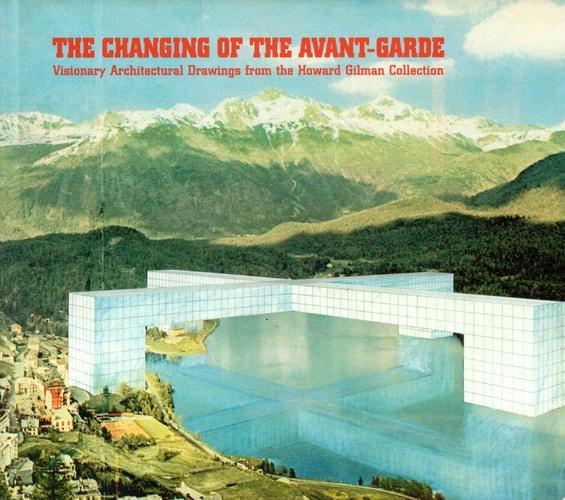
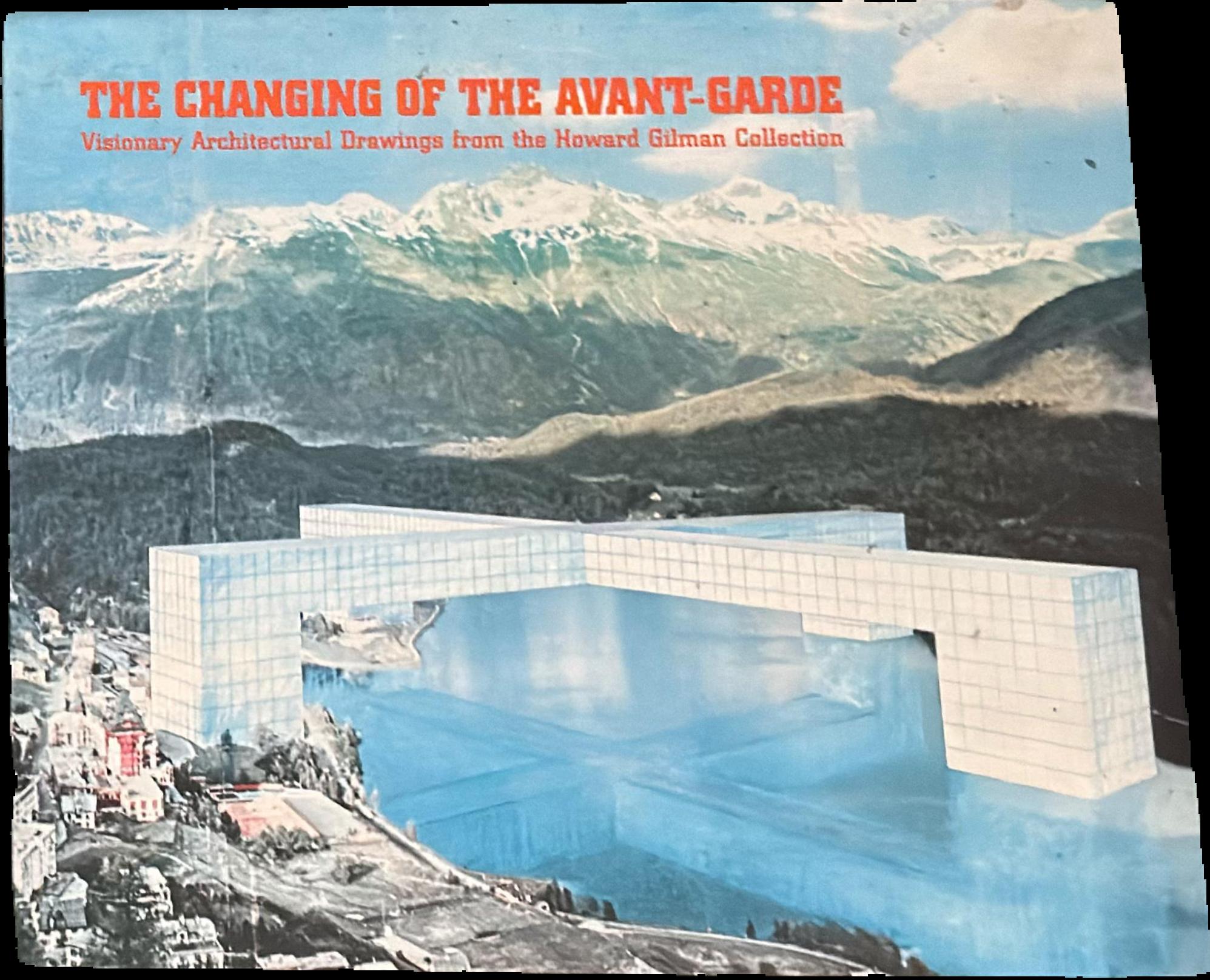
1. **Utopian Architecture & Visionary Design**
The book centers on idealized, fantastic, and unbuilt architectural proposals — structures conceived as dreams rather than blueprints. These drawings ask "what if?" about radically reimagined ways of living, working, and moving through space.

The book's central provocation is: what does it mean to design a building that was never meant to be built, and what does that tell us about the limits and desires of a given era?

Connect to books about: utopian urbanism, speculative design, paper architecture, architectural imagination.

---

2. **The Avant-Garde in Architecture (1960s–70s)**
The collection focuses tightly on radical architectural experimentation during the 1960s and 70s, a period of intense questioning of modernism's assumptions about form, function, and society.

Architects like Archigram, Rem Koolhaas, Cedric Price, and Arata Isozaki appear throughout, representing a global network of disruptive architectural thinking that challenged conventions of professional practice.

Connect to books about: postmodernism, late modernism, Archigram, Metabolism movement, counter-culture architecture.

---

3. **Architectural Drawing as Art Form**
The book treats the architectural drawing not merely as a technical instrument but as an autonomous artwork — one capable of carrying ideas that built architecture cannot. The drawings range from ink and graphite to collage and polymer sheets.

This raises questions about the boundary between architecture and visual art, and the drawing as a primary medium of architectural thought rather than a secondary record of it.

Connect to books about: architectural representation, drawing theory, technical illustration, the relationship between art and architecture.

---

4. **Megastructures & Urban Futurism**
Projects like Ron Herron's *Cities: Moving* and Buckminster Fuller's Dymaxion House envision radical new urban and structural forms — mobile cities, geodesic systems, and vast interconnected infrastructures that dissolve traditional ideas of the city.

The megastructure and the nomadic city become metaphors for rethinking human settlement at a planetary scale, reflecting Cold War anxieties and post-industrial optimism simultaneously.

Connect to books about: megastructure theory, urban futures, Buckminster Fuller, infrastructure and cities, smart cities.

---

5. **Museum Collecting & Curatorial Practice**
The book documents the MoMA acquisition of one of the world's foremost collections of visionary architectural drawings, assembled by collector Howard Gilman and curator Pierre Apraxine in just a few years between 1976 and 1980.

It raises questions about how institutions decide what architecture to preserve, how curatorial vision shapes a field's history, and the politics of canonizing unbuilt work.

Connect to books about: museum studies, curatorial theory, art collecting, institutional history, architectural archives.

---

6. **Postmodernism & the Critique of Modernist Orthodoxy**
Many of the drawings in the collection can be read as critiques of — or departures from — the dominant rationalist and functionalist doctrines of CIAM-era modernism. Groups like Archizoom and Superstudio used irony, excess, and conceptual provocation to destabilize modernism's certainties.

The book sits at a pivotal moment when the avant-garde was no longer a unified movement but a fractured, pluralist field of competing visions.

Connect to books about: postmodern theory, CIAM and its critics, Italian radical architecture, Superstudio, architectural theory.

---

7. **Technology, Ecology & the Future of Dwelling**
Designs like the Dymaxion House reflect a broader preoccupation with technology as a liberating force — prefabrication, mobility, efficiency, and the idea that new materials and systems could reinvent how humans inhabit the world.

Running alongside techno-optimism is an ecological undercurrent, with some projects imagining architecture in dialogue with landscape, climate, and resource constraints rather than in opposition to them.

Connect to books about: sustainable architecture, prefabrication, technology and shelter, ecological design, Buckminster Fuller.

---

8. **Architecture, Power & Social Imagination**
Several projects in the collection — including Cedric Price's Fun Palace and Isozaki's Hiroshima proposals — are deeply entangled with political and social visions: architecture as a tool for liberation, mourning, play, or collective life.

The unbuilt drawing becomes a site where architects articulate social desires that existing institutions and