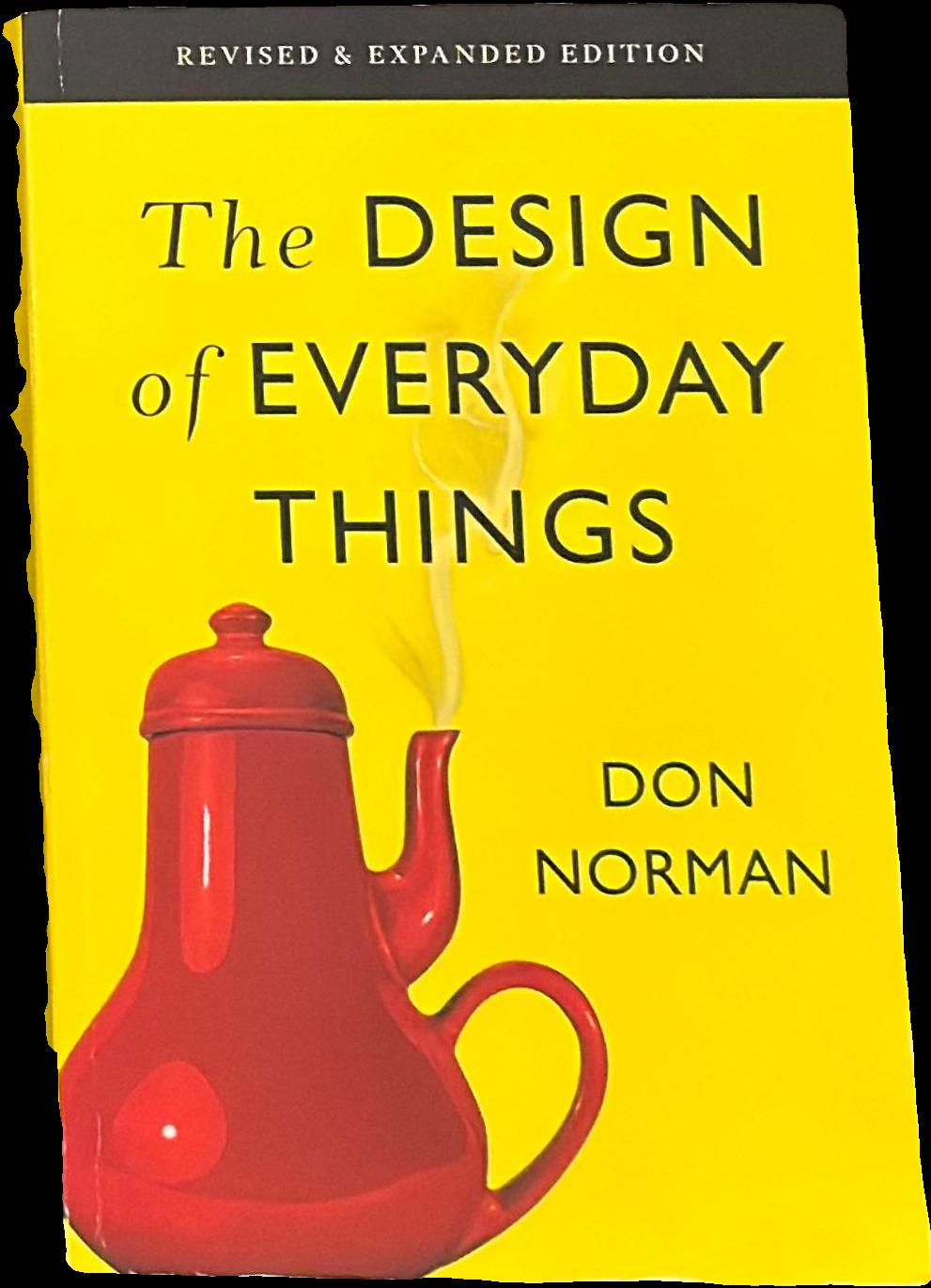
"The Design of Everyday Things" by Don Norman explores **human-centered design**, emphasizing how the design of everyday objects impacts their usability and the user's experience. The book argues that successful design should prioritize human needs, capabilities, and behaviors. 【1】【3】

Key themes and topics include:

*   **Discoverability and Understanding**: These are presented as crucial characteristics of good design. Discoverability refers to how easily a user can determine what actions are possible with a product, while understanding relates to how well they grasp how to use it. 【2】【5】
*   **The Psychology of Everyday Actions**: The book delves into how people interact with objects and the psychological principles that influence their behavior and evaluation of actions. 【6】
*   **Bridging the Gulfs**: Norman discusses the obstacles users face between their desired outcome and the available actions, and how design can help bridge these "gulfs." 【2】
*   **Norman Doors**: This concept, named after the author, illustrates poorly designed doors that confuse users about how to operate them. 【5】【8】
*   **User-Centered Design (UCD) vs. Traditional Design**: The book champions UCD, which places human needs at the forefront, in contrast to traditional design that may prioritize logic or aesthetics. 【1】
*   **Interaction Design and Experience Design**: These fields are relevant to the book's focus on how users interact with and experience products and systems. 【4】
*   **Industrial Design**: While Norman's work touches on industrial design, his emphasis is on optimizing function, value, and appearance for the user. 【4】【7】

The book is considered a foundational text in user-centric design and examines how design acts as a communication channel between objects and users. 【3】【9】